Project Hail Mary Movie Review | Unlikely Hero, Impossible Odds
by Garry Murdock
ImagIMAX
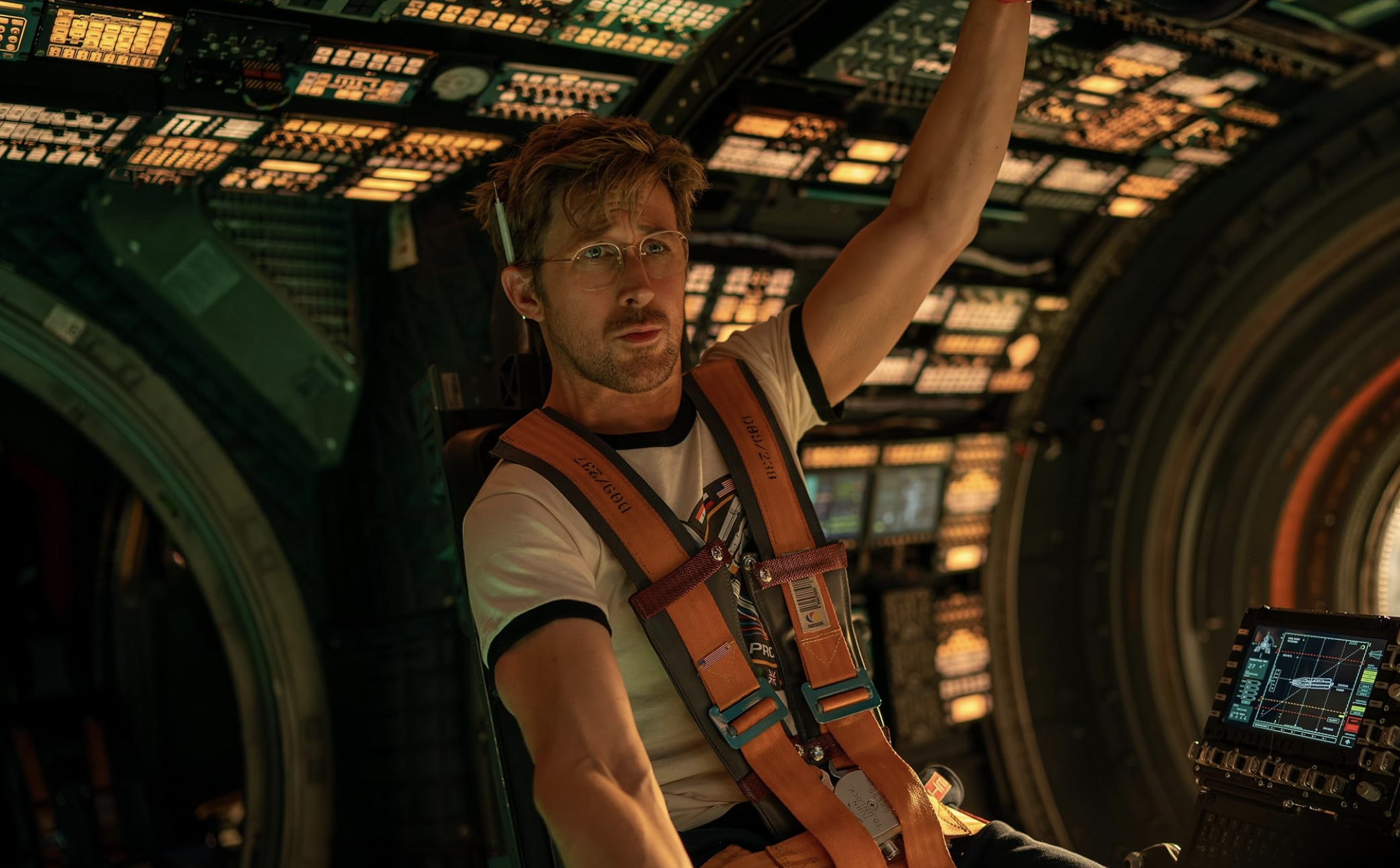
Imagine. You wake up in a strange place, inside what appears to be a body bag, with amnesia. Judging from the equipment and the tube coming out of your throat, you’ve been asleep a long, long time. A computer is asking you what 2 + 2 is. It doesn’t answer your questions, but you do learn your “muscle function has not yet been restored” and that a transmission to Earth would take over 11 years. Once you crawl around a bit, you realize you’re inside a spaceship. And that the rest of the crew is dead. You have no idea what you’re doing there, what your mission is, and if you’re ever going to see home again.
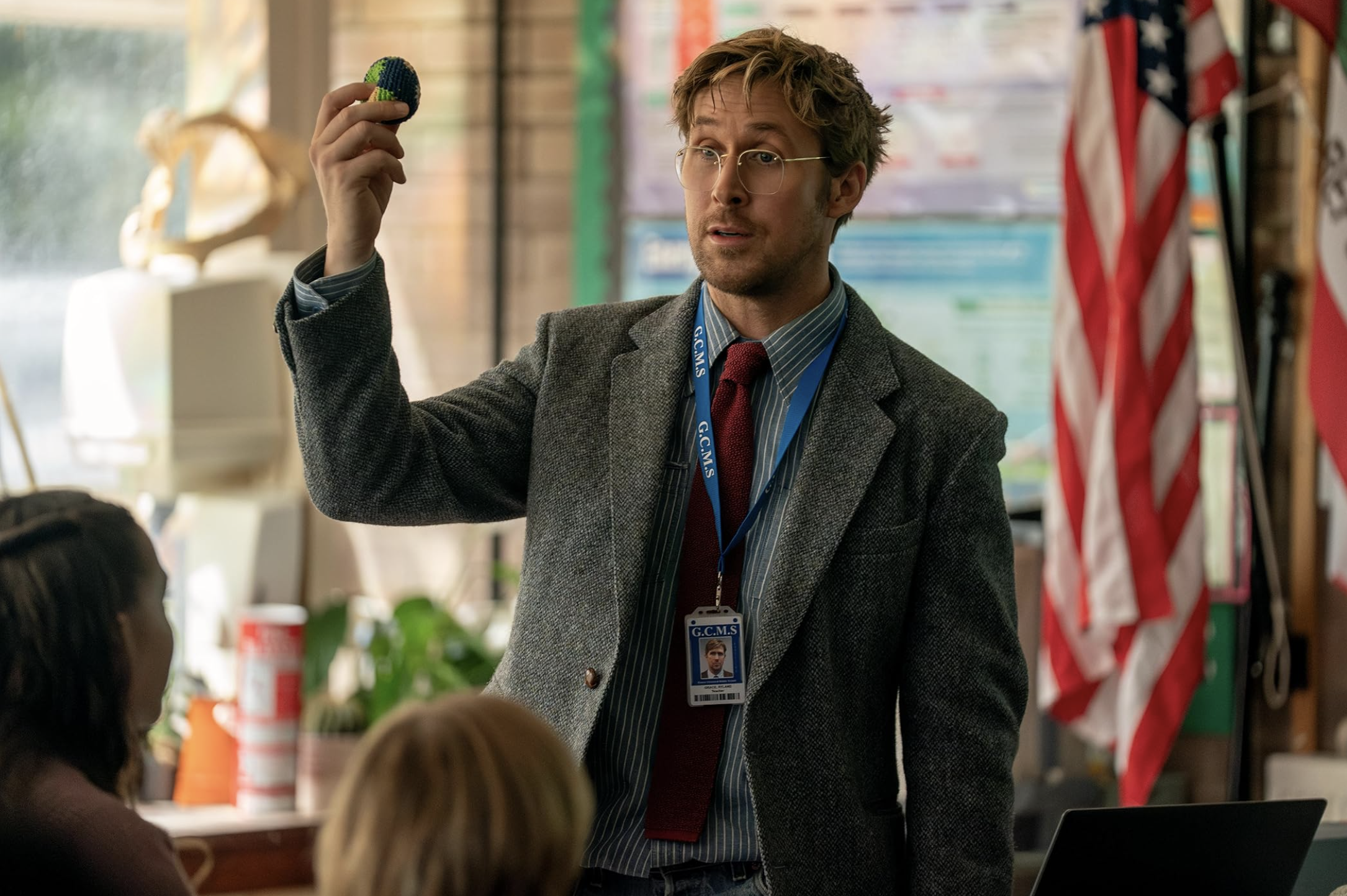
This is the premise of the film Project Hail Mary, just released on digital. Ryan Gosling plays Doctor Ryland Grace, and he’s the one all alone on the ship. Memories start to come back to him (fortunately for us, those memories are in sequential order). He remembers that he was once a molecular biologist, who wrote a dissertation on the “Analysis of Water-Based Assumptions and Recalibrations of Expectations for Evolutionary Models” (translation: liquid water is not necessary for the evolution of life on other planets). His theory didn’t go over well. In fact, it got him fired. So he became a grade-school teacher and attempted to go on with his life.
Then one day, Eva Stratt (Sandra Hüller) marches into his classroom. She likes his theories. As the head of a task force investigating a microbe (called Astrophage) that is dimming our sun, she wants Grace’s help to save the Earth. His life is changed forever.
Project Hail Mary is an epic sci-fi adventure filled with drama, high stakes, and plenty of witty humor. Ryan Gosling is perfectly cast in the lead, bringing a charming, everyday-man quality and a sharp wit to the role. His co-star is an alien nicknamed Rocky—a pint-sized, rock-like extraterrestrial on the exact same mission as Grace: to save his home planet. Instead of being rendered in CGI, Rocky is a puppet so brilliantly brought to life that he feels entirely real. Like Grace, he gets excited when ideas work and crushed when they don’t.
Rocky’s tangible presence clearly elevates Gosling’s performance, giving him a physical partner to riff with during shooting rather than an empty space. Rocky’s voice is equally inspired, possessing a childlike innocence that echoes HAL 9000 from 2001: A Space Odyssey. Rocky says endearing things like “fist my bump!” instead of “fist bump,” or “it’s time to go” instead of “it’s go time!”. And he ends every question by actually saying the word “question?”. He grows on you fast, you can’t help but root for the little guy, and it’s genuinely terrifying when Rocky risks his life in an attempt to save Grace.
James Ortiz is the puppeteer behind Rocky. His name has been submitted by the film’s studio (Amazon MGM) for Best Supporting Actor consideration for the 2027 Academy Awards—a nod to his abilities both guiding the character’s intricate movements and for providing the voice of Rocky. Wow.
IMAX
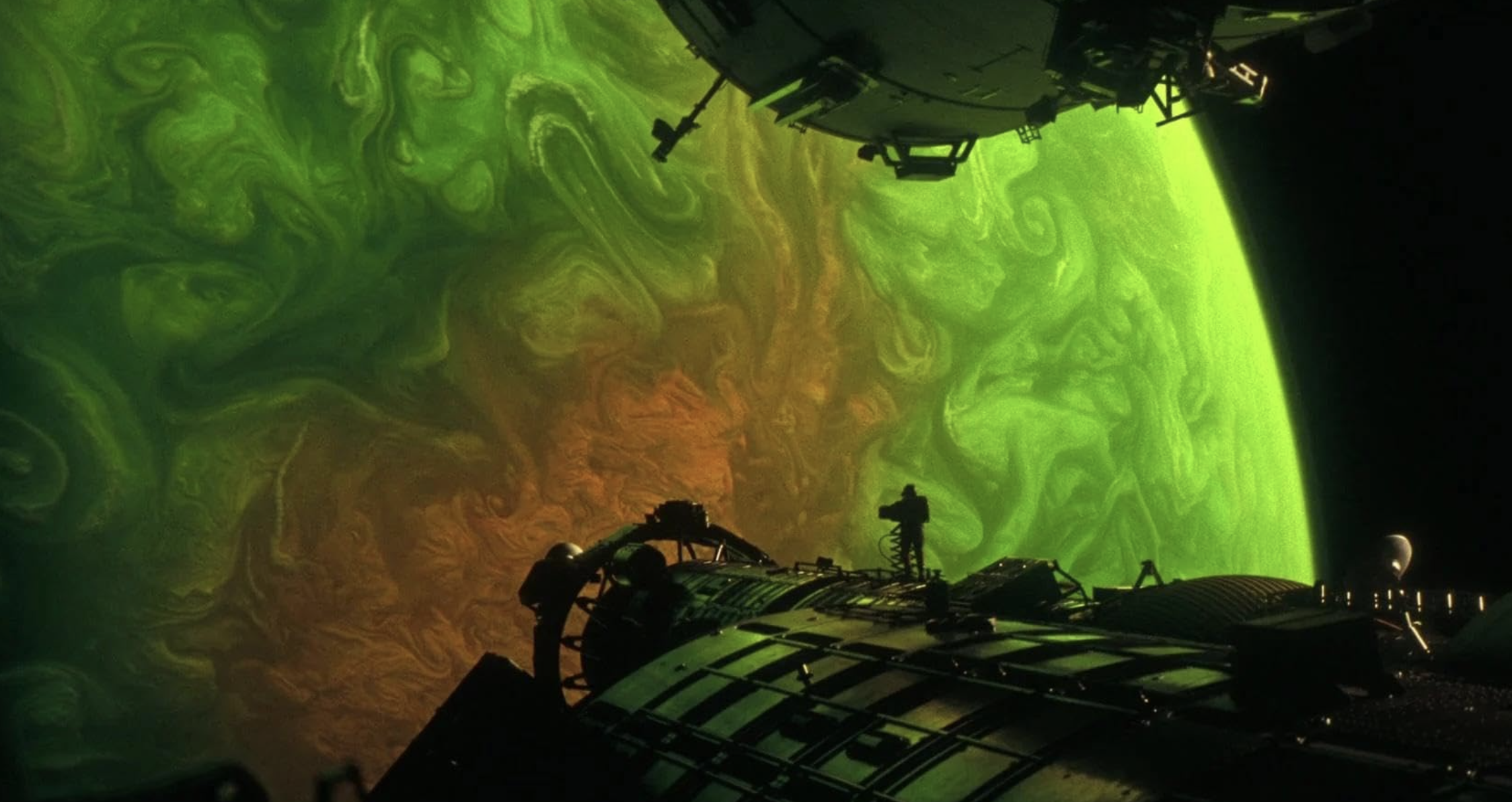
The relationship between Grace and Rocky is so captivating that it could have easily eclipse the film’s stunning visual effects and action sequences (but, they hold up on their own). Surprisingly for a science-fiction film, not a single green screen was used in production. Directors Phil Lord and Christopher Miller opted for a mixture of life-size sets, practical and visual effects. Not only is the entire inside of the ship (both rooms and corridors) a complete set, but part of the exterior hull was built too on the film’s soundstage. This allowed more freedom of movement for the camera operators. For viewers, it feels completely real.
The movie was filmed for IMAX. This means that when viewed on an IMAX screen, the film has an expanded aspect ratio and a dedicated sound mix, providing movie-goers with a more immersive experience. Which is absolutely the way you should watch this film if you get the chance.
IMAX
The film’s storytelling structure is clearly inspired by 2015’s The Martian. In that film, the main character is isolated on Mars, trying to figure a way to get to Earth before he starves to death. Back home a team of scientists are scrambling to find solutions. This is basically the same structure as Project Hail Mary, except that the back home scenes are in flashbacks. The formula works; The Martian was one of the top films of 2015, and it’s looking like Project Hail Mary will be too, for 2026. To date, the movie has grossed almost $670 million worldwide (on a budget of $200 million).
It may be no surprise then to note that both films are based on novels by the best-selling author Andy Weir—who, according to Rolling Stone, was an active producer on Project Hail Mary. This is unusual, as most writers who are given a ‘producer’ credit sit in on a few production meetings and are granted a set visit or two. But not here, Weir had actual responsibility and decision-making power. If you’ve read the book (as I have), then you know that Weir incorporates a lot of hard science into Grace’s adventure, but somehow Weir explains it in a way that even a layman can understand. Bravo.
I am often disappointed by film adaptations of books, though sometimes it can’t be helped. This is because the book has the space to provide a deep backstory and evoke complex emotions in a way a movie simply cannot. A book can, well, take its time too.
In the book, Grace takes much longer to emerge from his coma, allowing us to fully feel his confusion and ultimate terror upon realizing he is not just in outer space, but entirely alone. He also realizes that his muscles have been artificially stimulated during his long sleep, giving him the physical build of someone who has been intensely working out.
The character of Eva Stratt also gets significantly more development in the novel. In fact, she wields such immense, unquestioned authority that seeing it translated to the screen would have made for some terrific scenes—particularly those where she tracks people down across the globe and recruits them to the project, regardless of their willingness.
There are other differences too, but they’re all minor quibbles. I have to say, for the most part, the script stayed remarkably true to the book—I suspect this is largely due to Weir’s direct involvement. For that, I am grateful.
Although early days yet, I suspect Project Hail Mary will gain a few Academy Award nominations (and not just for Rocky). The movie comes together in so many ways that it doesn’t feel at all like it’s 2.5 hour run-time.
Without spoiling the ending, it initially appears identical to the book until a single, seemingly casual remark is dropped. This new dialogue wasn’t in the novel, but what’s said has the potential to change everything for Grace.
Readers of the book will know what to expect. Until they don’t. Project Hail Mary earns that moment, and it’s well worth the watch.
About the Writer