Disclosure Day Review | A Mystery 79 Years in the Making
by Garry Murdock
ImagIMAX
Spielberg Returns to the Unknown in Disclosure Day
I think it’s safe to say, Steven Spielberg has always had a fascination with stories about aliens.
In 1977, he co-wrote and directed Close Encounters of the Third Kind. It’s a story about Roy, an electrical lineman, who—on a dark, rural road—has a brief encounter with an alien ship that changes his life forever.
In 1982, Spielberg brought us E.T. the Extra-Terrestrial, about a young boy named Elliott who attempts to help an extraterrestrial (nicknamed “E.T.”) find his way home.
In 2005, Spielberg’s War of the Worlds focused on Ray, a dock worker and crane operator, who is suddenly thrust into the middle of an alien invasion.
Perhaps you’re noticing a trend here in Spielberg’s work, in that the heroes of these stories are not astronauts, secret agents or members of the Special Forces. No, the heroes of Spielberg’s stories are everyday people who find themselves caught up in something beyond their comprehension. They’re not trained to deal with whatever is happening to them, but they know their lives have changed forever. We feel for these people because they are just like us—with regular jobs, mortgages, and relationships—but now they are on the run.
There was something to like about each of these films…but Spielberg wasn’t done with aliens just yet.
“What blew up my interest again in the whole UFO, UAP (Unidentified Anomalous Phenomena) was the 2017 story in The New York Times,” Spielberg stated in a recent interview for Universal Pictures. “It was a story about a Navy fighter (jet) that had basically captured (on tape) something that was performing impossible feats in the air. And that’s what got me really digging deep into ‘could there be another story in my canon of extraterrestrial stories that I’ve been involved in throughout my whole career?’”
Apparently, Spielberg’s answer to the question was ‘yes’, which brings us to his latest film: Disclosure Day.
IMAX
The Screenplay: Full Disclosure—and the Cost of Telling the Truth
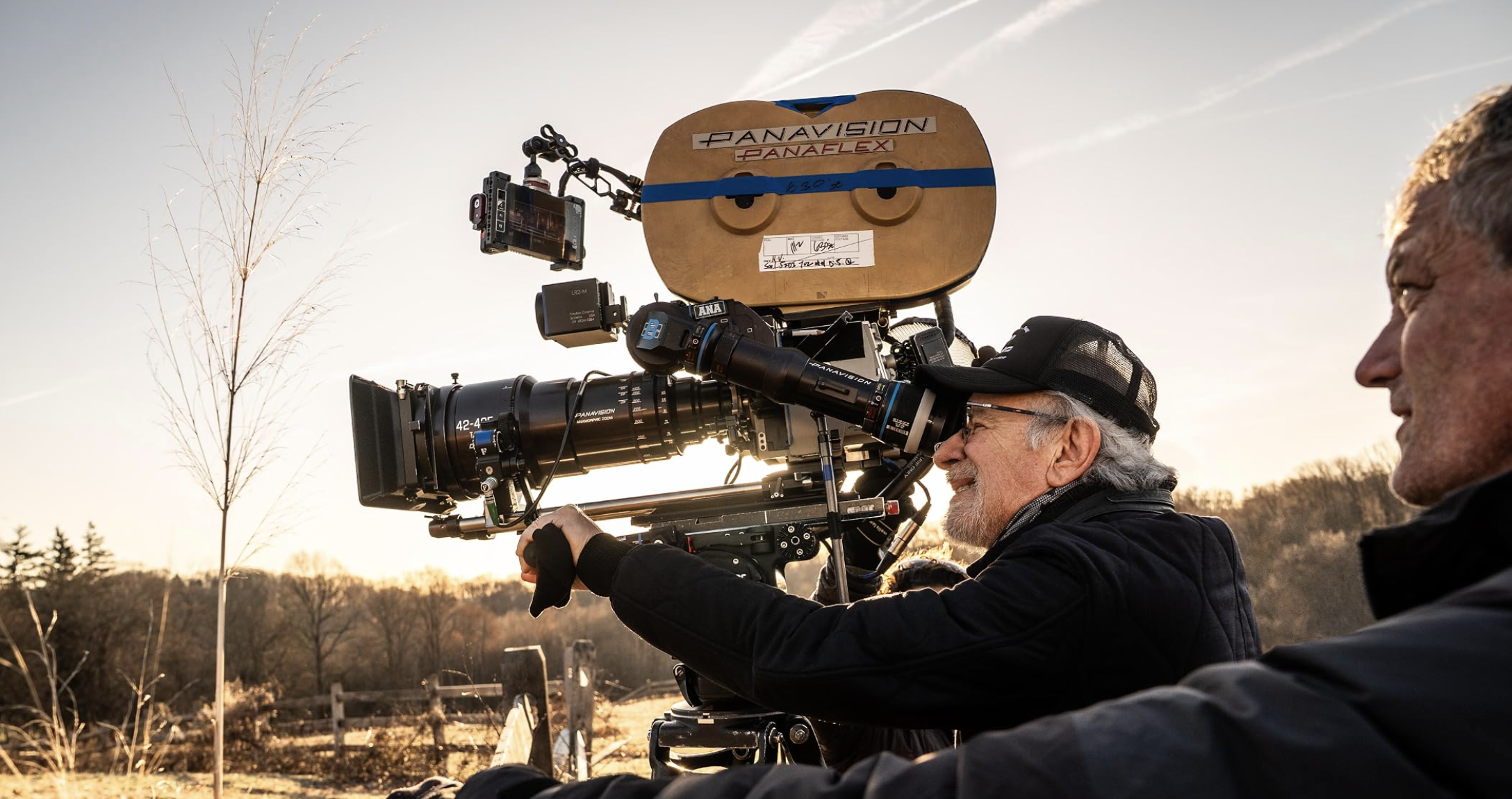
David Koepp (Jurassic World: Rebirth, Indiana Jones and the Dial of Destiny) wrote the screenplay based on a 50-page outline provided by Spielberg. The two have been collaborating together for over thirty years, starting when Koepp co-wrote the Jurassic Park script with Michael Crichton.
Here, the story starts innocently enough, in present day, where we meet Margaret Fairchild (Emily Blunt), a meteorologist for a Kansas City NBC affiliate. She has big dreams of becoming an anchor someday, but then one morning after a red cardinal flies into her loft, she starts to speak Russian. When later, on her way to work, a police officer pulls her over, she is able to tell him why he is having a bad day and gives him advice on how to solve his problems—leaving him speechless in the street. Upon arrival at the studio, she advises a co-worker that “it’s time for you to go to the police. Someone has to stop him. Maria needs you. Do it now. Do it now.” Then when she goes on air, and it’s time for the weather, she starts speaking a language that can only be described as…alien.
Nobody knows what’s happening to her, except perhaps a shadowy organization known as WARDEX (Waived Reporting, Development, and Extraction) a government contractor whose mission is to suppress all evidence of alien visitations to Earth. The organization is headed by Noah Scanlon (Colin Firth). Noah is not exactly played as evil, but WARDEX’s limitless power may have corrupted him. The organization has the authority to recover wreckage and technology from extraterrestrial crash sites, reverse engineer these discoveries, ruthlessly interrogate “non-human biologics”, pose as FBI agents, carry weapons, and abduct or murder citizens—all actions of which are considered classified with no political oversight (even the President doesn’t know of WARDEX’s existence). When Noah sees Margaret’s weather broadcast, he is very interested in finding her. Considering WARDEX’s secret mandate, Margaret’s safety—and survival—is anything but guaranteed.
Complicating matters for WARDEX, a group of rogue employees has stolen alien technology and classified video footage—which date back 79 years to the famous Roswell crash—with plans to blow the lid off decades of secrets through “full disclosure, to the whole world, all at once.” Disgruntled cybersecurity specialist Dr. Daniel Kellner (Josh O’Connor) is one of them. He suspects his job at WARDEX was not an accident—though he has yet to uncover the real reason.

IMAX
Revealing the information to the world—full disclosure—is not as cut and dry as it first seems. Daniel’s girlfriend Jane (Eve Hewson) raises some doubts about what releasing the truth on an unsuspecting population will mean: “We’ve been raised to believe in a supreme being, and now you want to show us actual supreme beings? People can’t handle both.”
This is all set against a backdrop of an impending world war.
The Stunts: Chases, Crashes, and a Duel-Inspired Set Piece
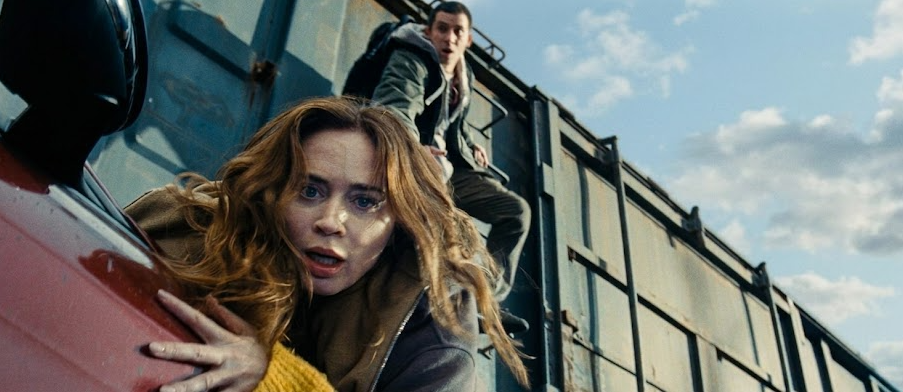
It’s hard in a pursuit movie to make the stunts seem fresh, but stunt co-ordinators Brian Machleit and Andy Gill and their teams get credit for succeeding here. Two stunts in particular come to mind, one when Daniel saves Jane from WARDEX agents by driving a car through a farmhouse, and another when Margaret and Daniel’s vehicle is slammed up against a moving train. The train sequence was inspired by Spielberg’s directorial debut, 1971’s Duel. Back then, Spielberg’s budget only permitted a near-miss with the train. Decades later, he finally got to execute his original vision: pushing the car into the side of the train, dragging it down the tracks, and into the path of an oncoming locomotive. Well done.
The Casting: Emily Blunt Shines in an Uneven Ensemble
I have mixed feelings about the casting of this movie. I felt Emily Blunt, Wyatt Russell (who plays Blunt’s boyfriend Jackson), Colin Firth, Colman Domingo (Hugo Wakefield, the leader of WARDEX’s rebels), and Elizabeth Marvel (Sister Maura) were all well cast. But I wasn’t thrilled with the performances of Josh O’Connor and Eve Hewson. As Daniel and Jane, they had major parts in the movie, but I didn’t think they could hold their own against Blunt, whose acting is marvelous. While watching, I found myself wondering what Adam Scott (Severance) and Lauren Cohan (The Walking Dead) could have done in these roles. No doubt there will be those who disagree with me, but every time O’Connor and Hewson came on the screen, I felt they belonged in another movie.
Music: Thirty Collaborations and Still in Perfect Harmony
The music is scored by John Williams, and this is his 30th collaboration with Spielberg (this tally does not include the TV shows they worked on together such as Amazing Stories, or the score Williams composed for Spielberg’s DreamWorks logo). Williams, now 94, has composed an excellent score, but this is not a surprise from the man behind the music for Jurassic Park, Superman, and Raiders of the Lost Ark (to name but a few).
When Disclosure Day Finds Its Sense of Wonder
The film clocks in at 2 hours and 25 minutes, but it’s in the final hour where the movie hits its stride. Margaret and Daniel uncover the buried secrets that have altered their lives, and we are witness to an amazing flashback sequence. This is where we see an actual alien abduction.
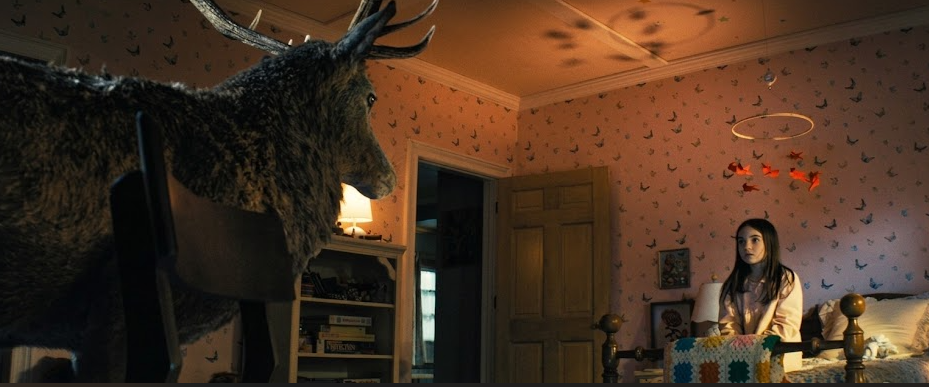
It begins with a deer and a fox arriving in young Margaret’s bedroom in the dead of night. I’ll leave the scene at that. What happens next is visually breathtaking, and it’s best experienced for yourself. In fact, I felt the shots here invoked that same sense of awe and wonder I experienced with earlier Spielberg films: when Doctor Grant first sees the dinosaurs in Jurassic Park, when Elliott’s bicycle lifts off the ground in E.T. the Extra-Terrestrial, and when the ark is at last opened in Raiders of the Lost Ark. These are the moments that makes these films worth watching, that make them talked about, that make them remembered.
The Art of the Reveal: From Jaws to Disclosure Day
The final showdown between WARDEX and our heroes morphs into something else that is entirely unpredictable. I don’t think I’m giving anything away by stating that aliens do make an appearance, but it’s when and how they are revealed that makes Spielberg’s films so unique.
I wonder if Spielberg’s handling of the reveal was influenced by the way he directed Jaws—the movie that made Spielberg, at only 28 years of age, a household name. In that film, audiences didn’t get to see the shark until halfway through the film. Or in Close Encounters of the Third Kind, the aliens didn’t appear until the film’s last act. Which is what happens here. I’m assuming Spielberg is going by the principle ‘less is more’.
I think that’s a smart strategy. I believe that’s because once the extraterrestrials are revealed, they may quickly become less interesting than our imaginations, or there may be nowhere left for the story to go. I think that’s why the movie ending the way it does (which I won’t reveal here) is the wisest decision Spielberg could have made as director of this film.
Disclosure Day at first feels like a straight-up action thriller, nothing we haven’t seen before: a far-reaching conspiracy, nice people being pursued, a race against time to gather crucial information, and then a showdown. I just wish the movie had taken a different route to that last hour, which is unique and inspiring.
About the Writer