Everest: The Other Side Review | Not the Documentary I Was Expecting
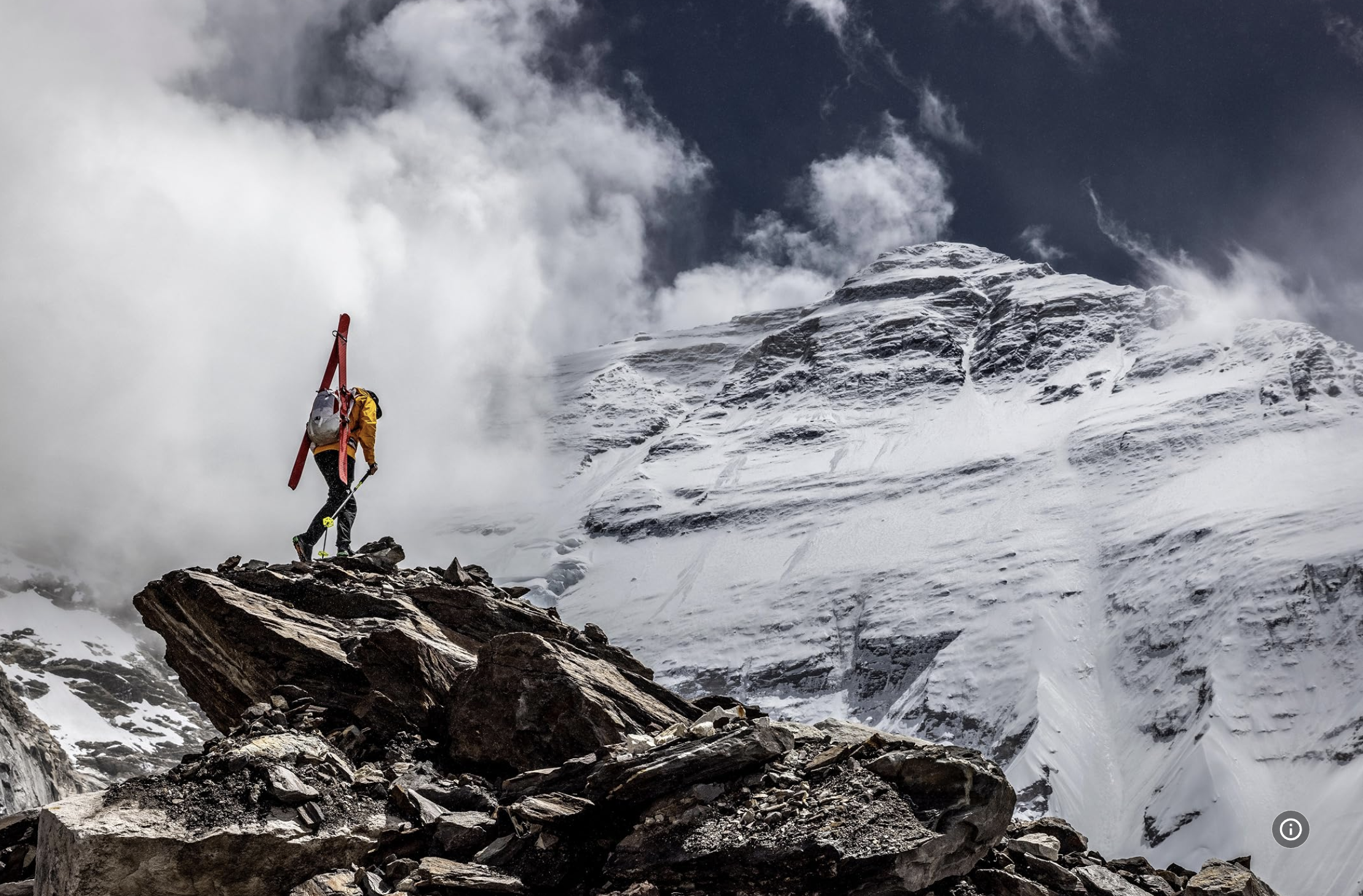
Everest: The Other Side introduces us to Jim Morrison, ski mountaineer, who aims to be the first to ski down Everest. To accomplish that, he plans to climb the north face of the mountain, a much more dangerous undertaking than the more popular south side. Only five people have ever made it to the top. None have ever skied down what is perhaps the longest uncharted ski hill in the world. Read our full review here.
by Garry Murdock
IMAX
“Everest has been summitted over 13,000 times,” Jim Morrison tells us early on in Everest: The Other Side, “but only five people have ever climbed the direct north face. And no one in the world has ever skied it.”
Everest: The Other Side is not at all the documentary I thought it would be. At first, it feels like a traditional love story where two people, Jim Morrison and Hilaree Nelson, meet unexpectedly, and fall in love. Then comes their decidedly non-traditional dream: climbing Mount Everest’s north face and then—as if that weren’t enough of an accomplishment—ski back down to the base camp (and be the first to do so). Just a few minutes in, and I was already thinking: of course they’ll succeed!
But the story detours in ways I could not have possibly imagined.
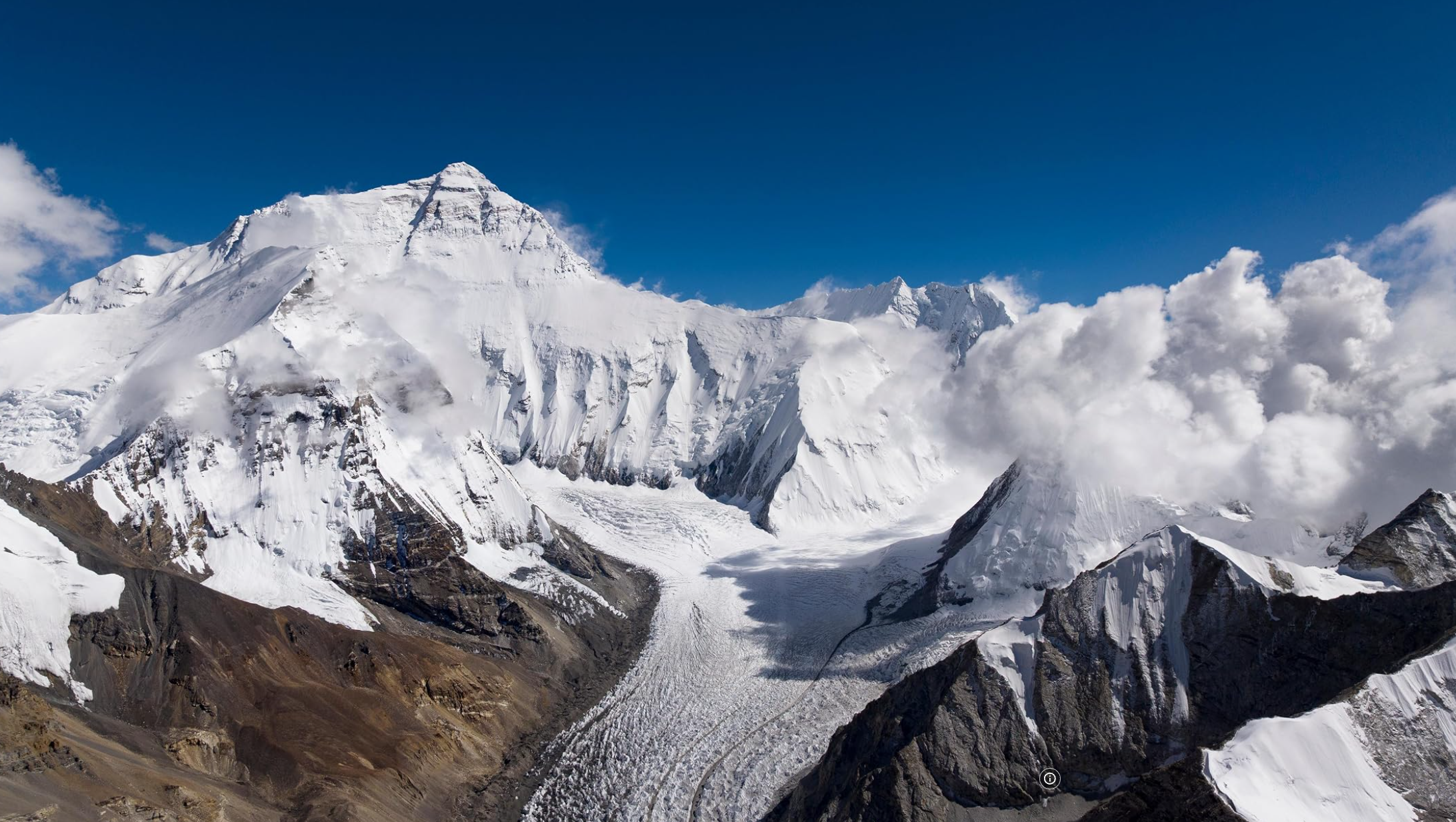
Everest is the highest mountain on Earth, straddled between Nepal and China. It rises to an elevation of over 29,000 feet (not much lower than what commercial airplanes fly). Indeed, in the first few minutes of the documentary, we glide through a panorama of shots of mountain tops peaking up through the clouds. Presented in IMAX, this looks absolutely glorious. And dangerous.
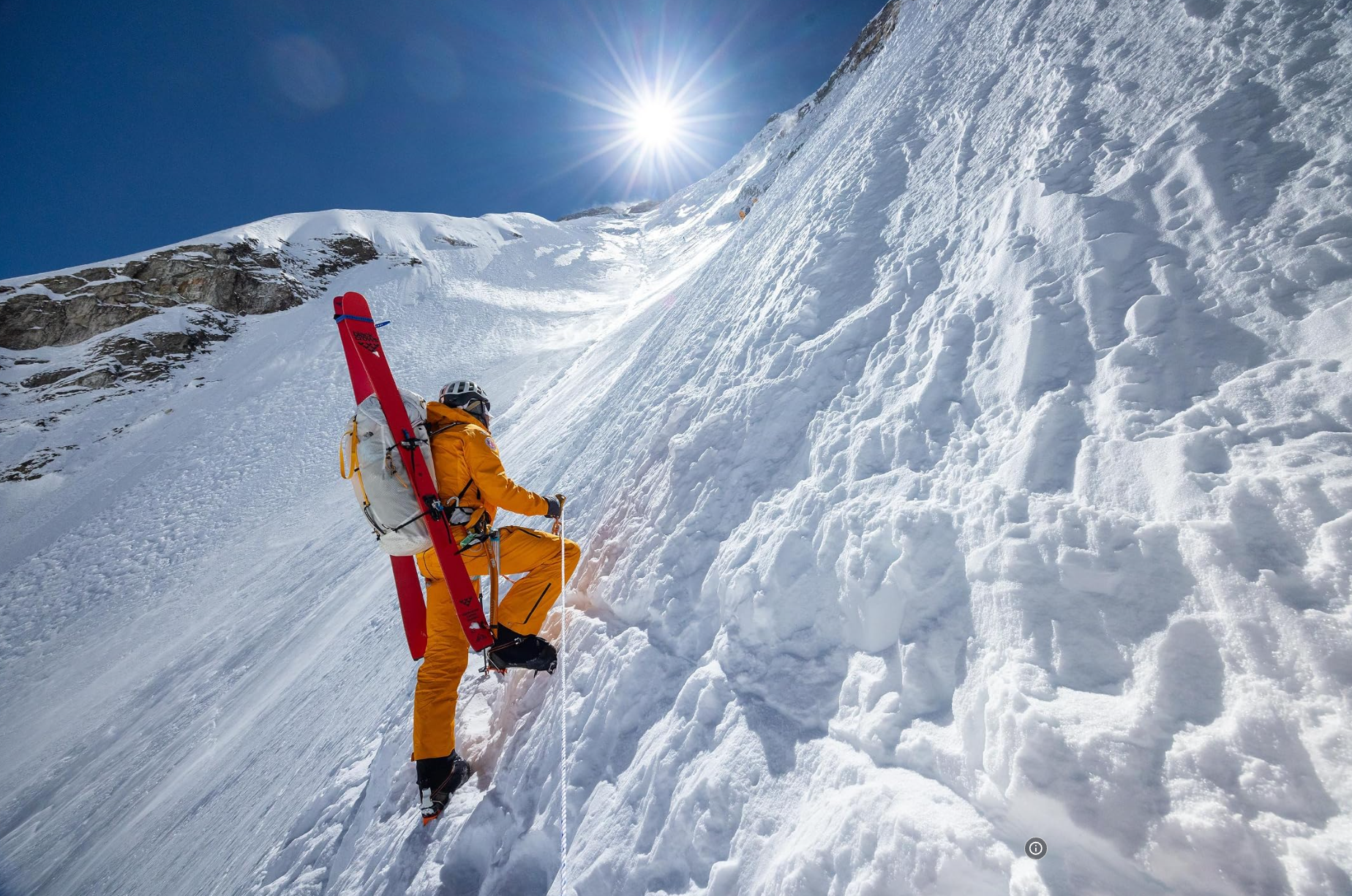
Recently, I previewed the film Tenzing, the true story of how Tenzing Norgay and Edmund Hillary were the first to summit Everest’s south side in 1953. You can read my review of Tenzing here. However, Jim’s and Hilaree’s expedition will be quite different. The direct north face route they will be travelling presents a far more dangerous ascent: steeper, more complex terrain, paired with punishing winds and colder temperatures. Because it’s a significantly longer route than the south side, they will remain exposed to extreme altitudes for extended periods—drastically increasing the threat of high-altitude illnesses like hypoxia.
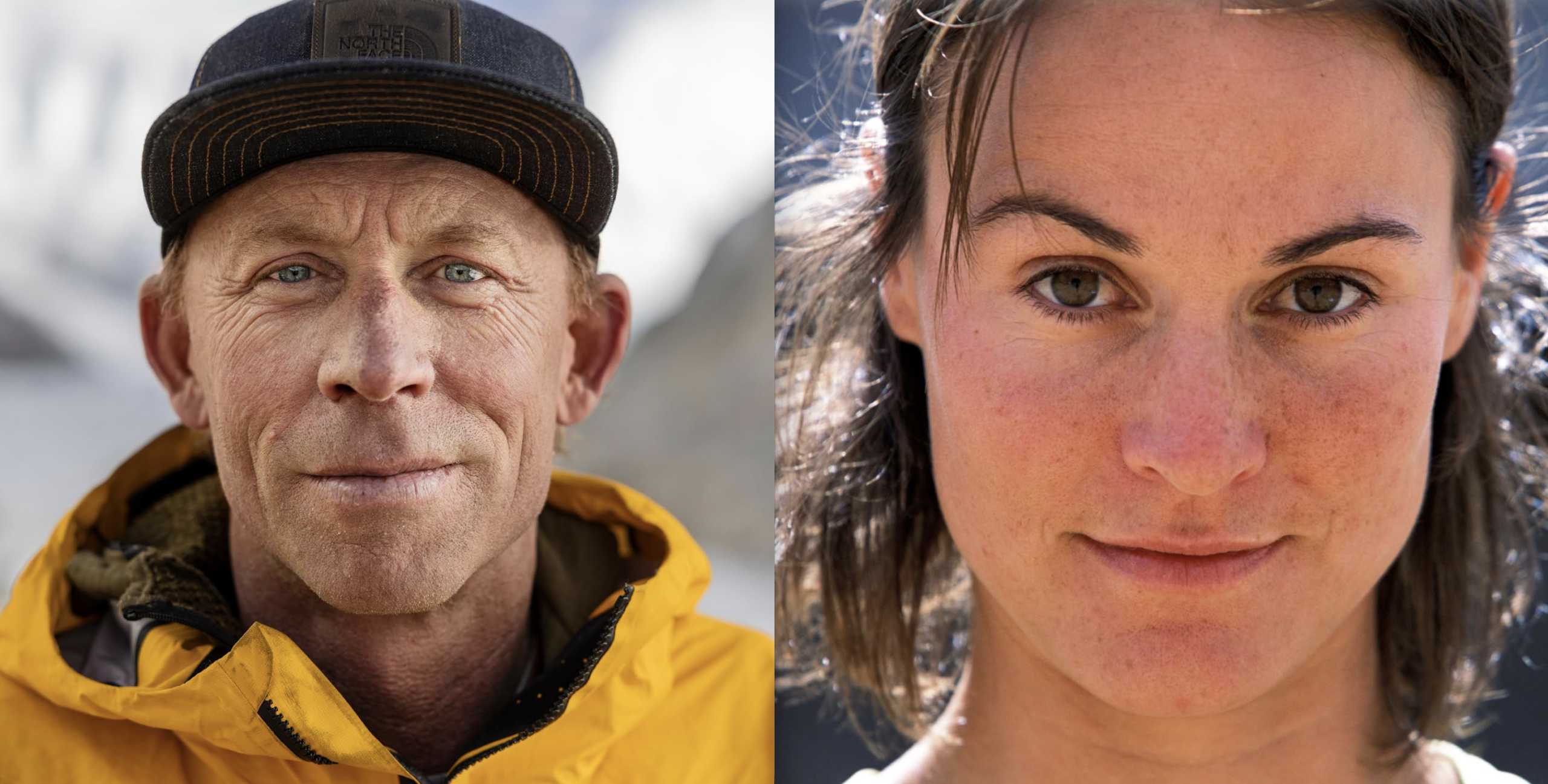
Produced by National Geographic Documentary Films and directed by Jimmy Chin and Elizabeth Chai Vasarhelyi, the documentary leaves the mountains and goes back in time some years to visit Jim and Hilaree through a series of interviews and voice-overs. We learn how they came to be a couple, and we meet Hilaree’s two children from a previous marriage. They all seem to get along great. In fact, what we see looks like typical family bliss.
IMAX
IMAX
Jim and Hilaree are both professional ski mountaineers. In 2018, they made history by being the first to ski down Lohtse mountain (it is the world’s fourth-highest mountain, also located between Nepal and China). So, they seem to have the skills and experience to take on Everest. But there is no accounting for Mother Nature, or when she will strike.
During training, Hilaree is killed in an avalanche. Jim is shattered.
At this point, it started to dawn on me that for Jim and his expedition team, death is normal. I was stunned when one team member asks, “How many people have eaten at our dinner table who died?” Her husband does not remember.
IMAX
This response made me question Hilaree’s motivations, and whether a mother of two children should have retired from the sport. The more I thought about it, the more upset I started to feel. Maybe I felt this way because I’m a parent, and with parenting comes certain responsibilities. One of the obvious ones is to give up activities that could make your kids orphans.
However, like many people undertaking something dangerous, I imagine Hilaree thought she’d be okay. Who, when doing something this risky, really thinks they are going to die? Nobody, because nobody can relate to death. It’ll always be the other unfortunate guy or gal, but not you—until, suddenly and without warning, it’s over.
The documentary had another surprise it springs on us (and which should have come sooner, in my opinion). It’s revealed that Jim is a widower. Years before he met Hilaree, he lost his wife and two children in a plane crash. How, I wondered, after everything that has happened to him—the loss of two women he loved and his children—could he even get out of bed in the morning?
The answer, it seems, was to go climb Everest. After all, Jim has no dependents (Hilaree’s two boys went to live with their father), and no other commitments. Would there ever be a better time?
The expedition does proceed, but it is fraught with problems. One team member breaks a leg and has to be taken back down to the surface. Avalanches, extreme cold, and thin oxygen are just some of the variables that need to be dealt with. The snow is also not the same thickness or texture as one ascends the mountain. Eventually, they call off the expedition.
The team decides to return the next year. And finally, Jim and a few members of his team do make it to the top. It takes many weeks to get there. Jim spreads some of Hilaree’s ashes at the summit. And then there is the ski down. Only Jim will attempt it, and one false move could mean death. It is perhaps the longest uncharted ski hill in the world, requiring him to navigate a treacherous 3,000-metre vertical drop across many kilometres of unforgiving terrain. It will take him an astonishing four hours to ski down it.
IMAX
While Everest: The Other Side captures a powerful story of determination against all odds, I felt the documentary’s pacing was uneven—some of the clips seem to be thrown together randomly. When we do get to the final climb and ski, it comes and goes too quickly. There are lots of great aerial shots, but I don’t feel the struggle of Jim and his expedition team. It doesn’t feel like weeks to get to the top, or four hours to ski to the bottom. We don’t feel Jim’s exhaustion, and I think we should have. Yet despite the pacing, there is no diminishing what he has achieved: a legendary, world-first triumph that rightfully earns him a permanent place in the history books.
About the Writer