
Graphic Design Student Chelsea Kumar Named Latest Recipient of BMO BIPOC Creative Achievement Award
In This Article
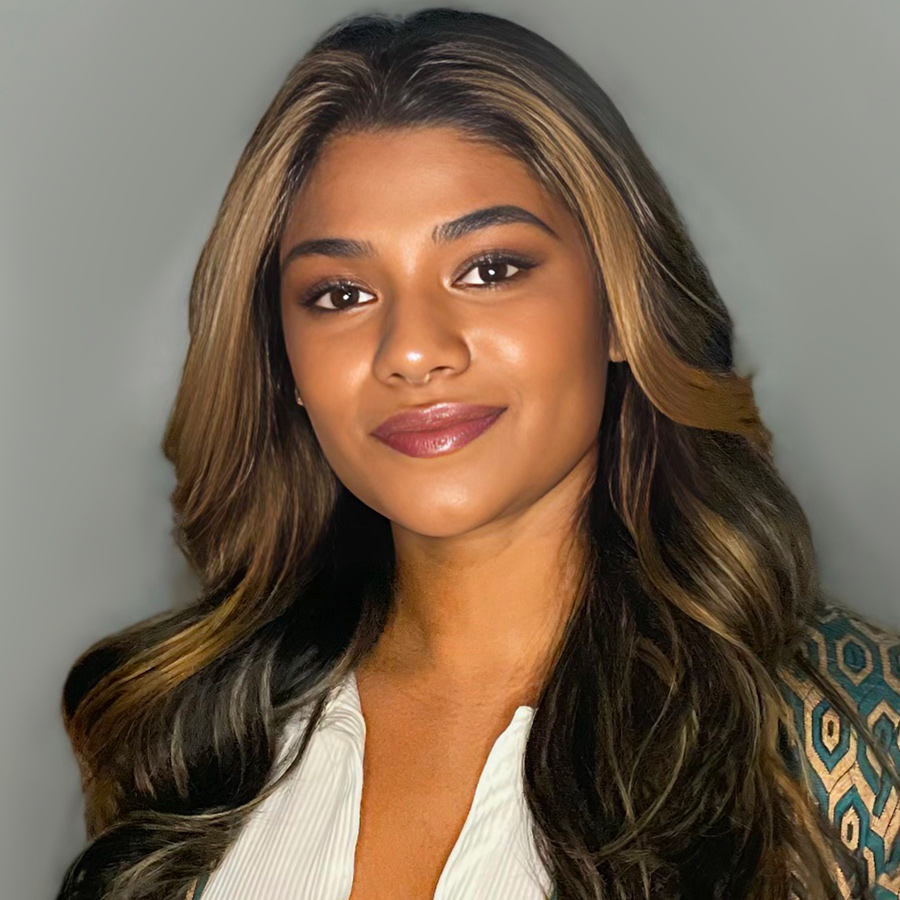
Graphic Design and Interactive Media student Chelsea Kumar has been named the latest recipient of the BMO BIPOC Creative Achievement Award.
Now in its third year, the quarterly bursary celebrates the creativity and promise of full-time TFS students who identify as Black, Indigenous, or People of Colour, and was created to help foster greater diversity and representation across Canadian creative industries. Chelsea is the July 2026 recipient and will receive $2,000 – reflecting BMO’s recently increased investment in the program, which raised each quarterly award from $1,250 to $2,000 for the 2026 cycle.
“Receiving the BMO BIPOC Creative Achievement Award provides me with vital financial support as I continue my studies, allowing me to focus more on strengthening my skills and building a strong portfolio while easing the challenges of returning to school,” Chelsea said.
“It also enables me to invest more deeply in my work and fully engage with the opportunities at Toronto Film School.”

A Journey Back to Herself
For Chelsea, the path to Toronto Film School was neither direct nor easy. After completing a diploma in Cosmetic Management at Humber College in 2014 and later studying Visual Merchandising at Sheridan College – where she was first introduced to graphic design – she spent years building a career in customer service, eventually becoming a Customer Success Manager at a tech company. It was a stable life, but not a fulfilling one.
“I had chosen security over purpose, and the cost was my sense of identity,” she said.
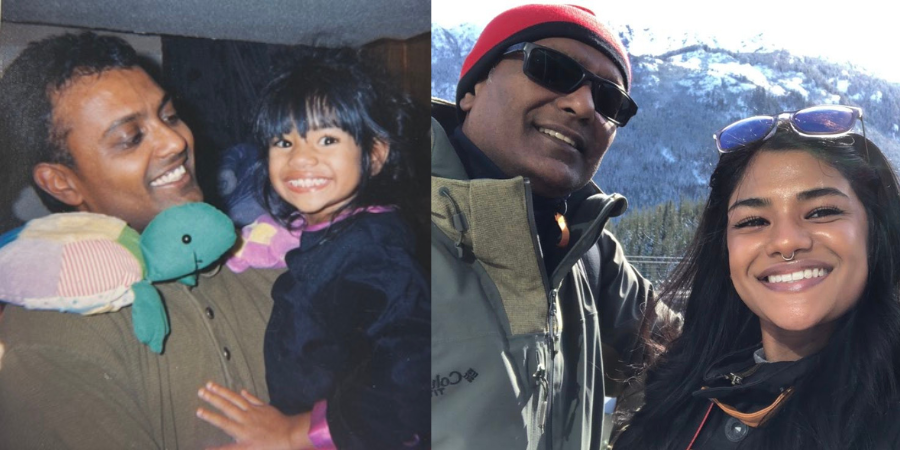
The turning point came through loss. Chelsea’s father lived with a terminal illness for nearly two decades before passing in 2024, and it was in his final months that he encouraged her to return to art – reminding her of the times he had asked her to paint oars, fishing lures, and murals.
“Looking back, I see that he was encouraging me to think for myself and pursue what I had long put aside,” she said.
After he passed, I asked myself a difficult question: ‘If I died today, would I be happy with the life I created?’ The answer was no. Choosing to study graphic design is how I am changing that answer.”

Art as a First Language
For Chelsea, the return to creative work was also a return to her true self.
“Art has always been my first language,” she said. “In a world that prioritizes words and sound, I have always turned to images, colour, and composition to express what I cannot easily say. As a visual learner, creating has always felt natural, almost meditative. It is where I feel aligned, honest, and most at peace.”
Returning to school to study graphic design, she said, “represents more than a career change. It is a reclamation of self.”
Watch this video for a look into Chelsea’s creative process in the making of “Everyday Life”.
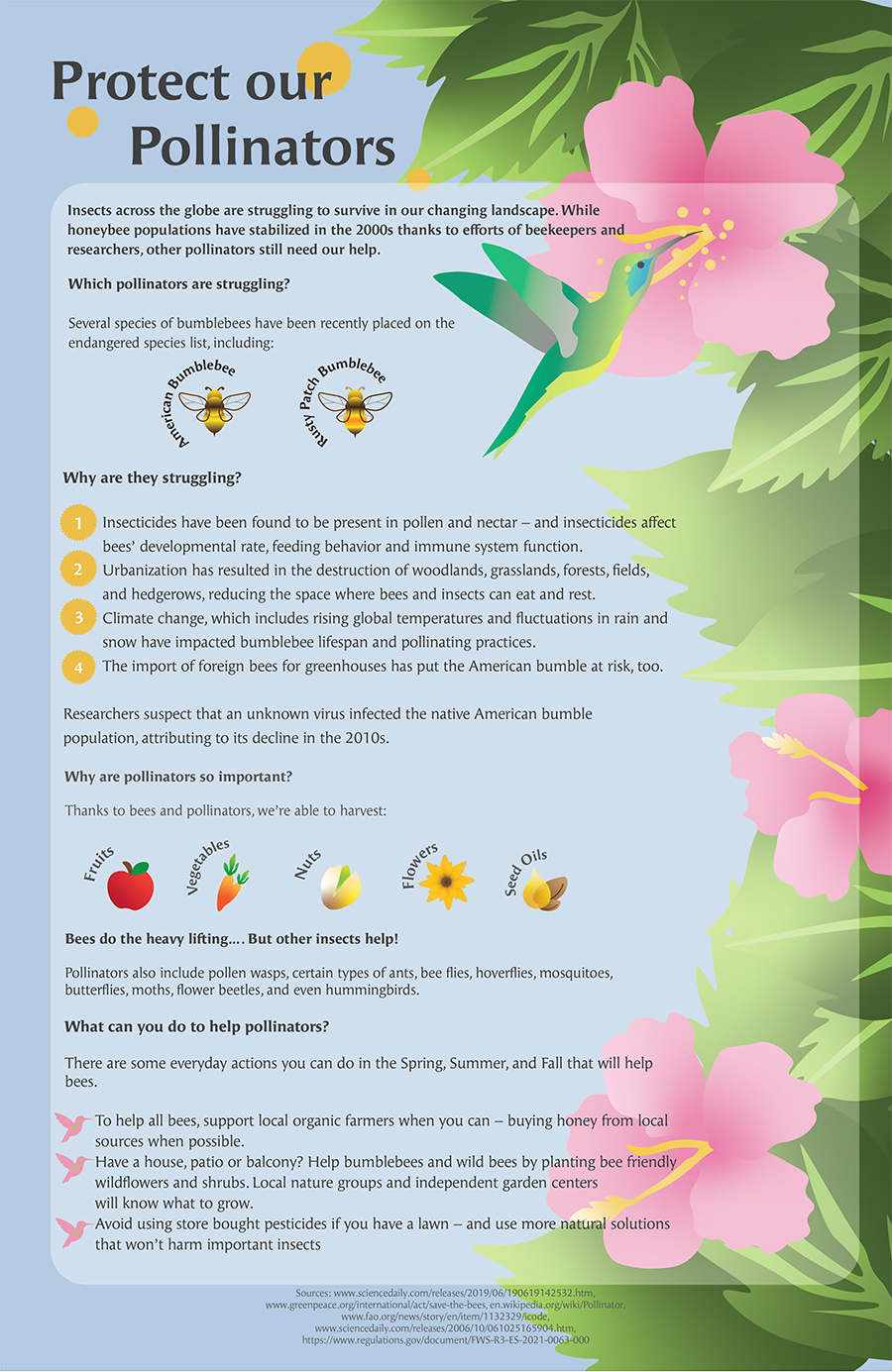
Another project she’s particularly proud of is her Pollinator Infographic. Inspired by her parents’ home country of Trinidad and Tobago, she wanted to highlight pollinators beyond bees, so she chose to feature a hummingbird pollinating a hibiscus flower.
“Trinidad and Tobago is often referred to as the Land of the Hummingbird, so this project became a small way for me to celebrate my heritage through design,” she said.
Building a Practice Rooted in Representation
Looking ahead, Chelsea’s goals are both personal and purposeful. After graduating, she plans to build a career in graphic design centred on emotion-driven visual storytelling, working in creative or media-driven industries while developing independent projects that reflect her own voice.
Chief among those projects is The Grief Diaries, a graphic storytelling series drawn from her lived experience with loss.
“Through illustration and design, I aim to create work that resonates with others navigating grief, offering both visibility and comfort,” she said.
In the long term, Chelsea hopes to establish a creative practice rooted in narrative design – one that explores identity, healing, and underrepresented experiences. As an Indo-Caribbean creative, she is particularly motivated to contribute to more inclusive visual storytelling.
“Our stories and perspectives are often underrepresented, and I want to create work that reflects the complexity, beauty, and nuance of identities like my own,” she said.
“I also want to encourage others like me to recognize and celebrate their progress, honouring the small steps just as much as the big ones, as they find the confidence to pursue their own creative paths.”
Recognition Beyond the Financial
For Chelsea, winning the BMO BIPOC Creative Achievement Award is itself a milestone – and not just because of what it will enable.
“Regardless of the outcome, I am proud of myself for finding the confidence to apply. This step alone represents growth for me,” she said.
Adam Till, VP Academic at Toronto Film School and a member of the bursary’s selection committee, said Chelsea’s application rose to the top on multiple fronts.
“Chelsea is a top student, a hard worker, and a leader among her peers. Her personal statement was honest and genuine, and her support from faculty was extremely strong,” said Till.
Her closing words speak to the spirit that earned her the recognition: “I am no longer willing to let fear dictate my direction. I am choosing to honour the creative voice that has been with me since childhood – the same voice my father believed in, even when I did not.”
For more information about the BMO BIPOC Creative Achievement Award and how to apply, click HERE.

