
Pluribus Review | A Masterclass in Storytelling
by Garry Murdock
IMA
Apple TV’s first episode of Pluribus begins innocently enough: in a research laboratory, work has been underway on a signal received from space 14 months earlier. The signal appears to contain instructions for a nucleotide sequence (which is the genetic code for creating a living organism). Apparently the scientists working there are using mice as test subjects for the sequence (I couldn’t begin to tell you how that works), and we watch in horror as a mouse bites one of the lab workers. At first it looks like the victim is having a heart attack, but that is not the case. Soon, she is well again. A little too well, and now she goes on deliberately infecting others. And those people go on infecting more people. And so on.
At this point I had my finger on the remote and was ready to switch to some other program. I thought: “Oh, it’s another Zombie series”. After giving up on The Walking Dead (after six seasons—was it ever going to end?), I didn’t need another. But I kept watching Pluribus for Rhea Seehorn, the lead. I loved her performance in Better Call Saul, and Pluribus reunites her with one of that show’s creators and executive producers, Vince Gilligan (who also brought us Breaking Bad, of which Better Call Saul is a prequel to).
I’m glad I did keep watching, as I consider this to be the most original television series pilot I’ve seen in years. Maybe, ever.

IMAX
Rhea plays Carol Sturka, a successful author. She is the writer of a series of best-selling books (known as “speculative historical romance literature”) that has resulted in millions of fans and endless book tours. She looks like she’s happy to sign books and engage with fans, but deep down inside she’s seething. Even though she has a partner she loves and is financially well set, she absolutely hates what she does, and considers her novels “mindless crap”. Helen, her partner (played by Miriam Shor) asks her: “Maybe it’s time for your serious book?”. But no, Carol isn’t happy with it, and has been “polishing” it…for four and a half years.
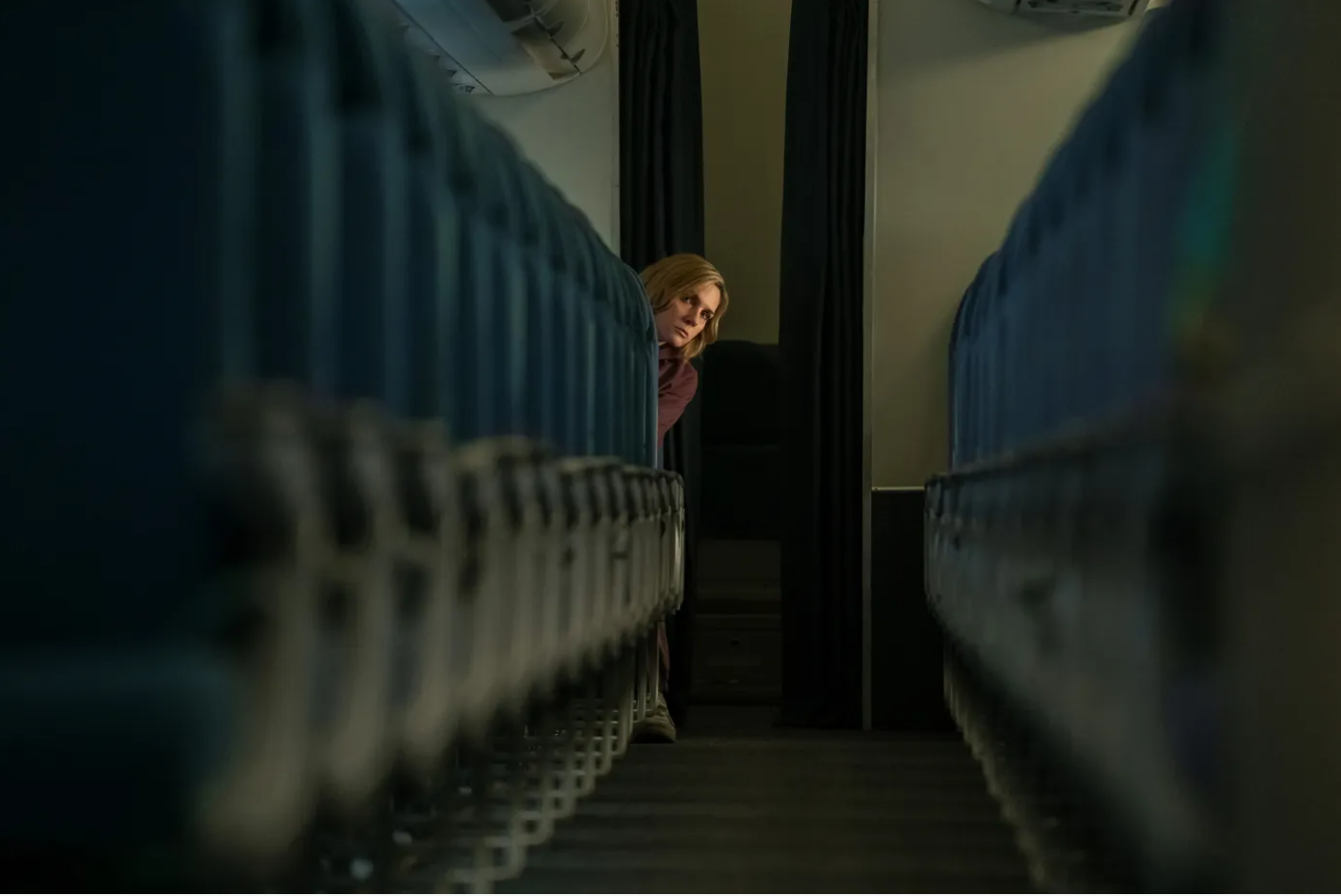
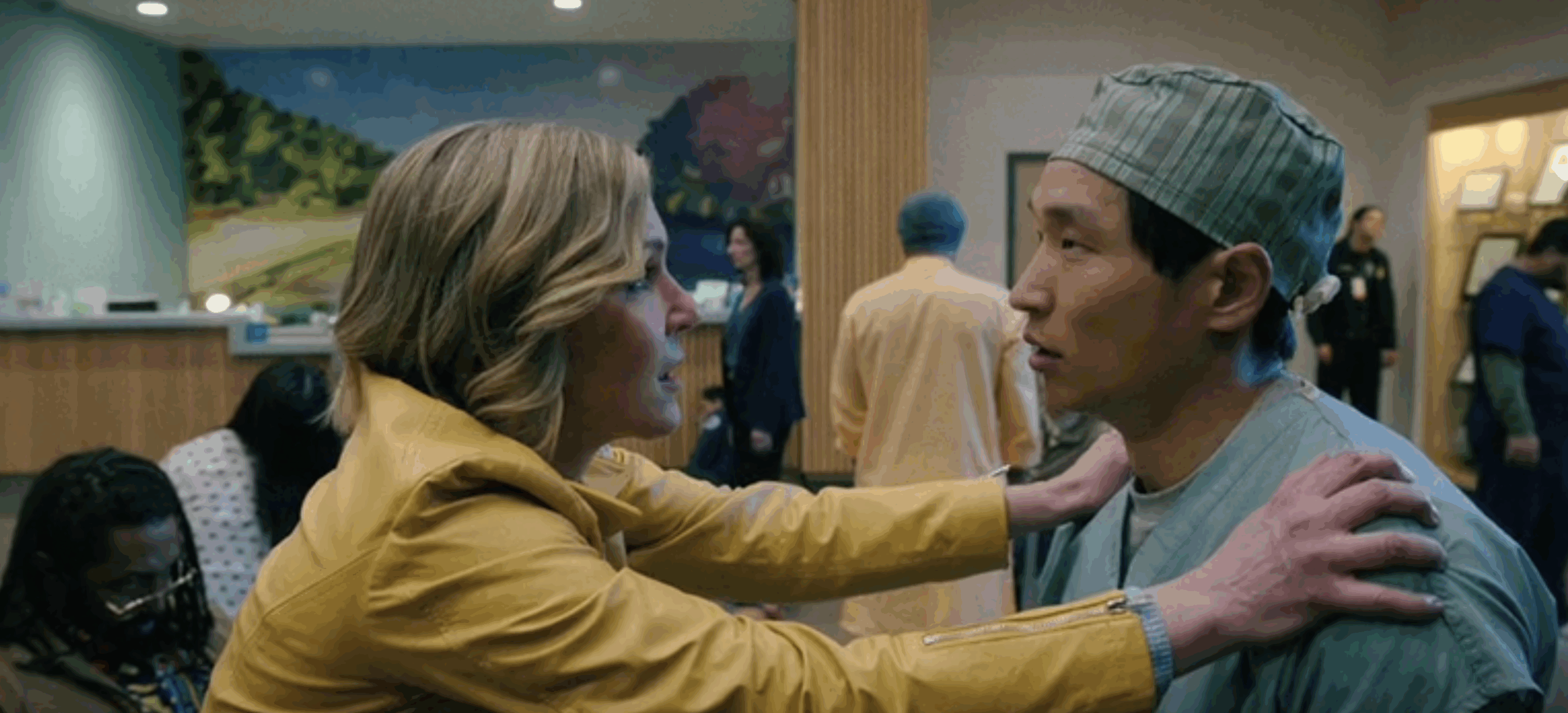
And there’s where the normalcy ends. Because when Carol and Helen step out of the bar where they’ve been talking, heading outside for a cigarette, there will be no going back. From then on, Carol will be running. But it won’t be for her life, as we all assume at first. There are no creatures chasing her with blood dripping from their mouths, or groans emanating from their throats. This is not that show. Actually, everyone infected seems to be polite, and happy to step aside when Carol asks them to. This strangeness is all compounded by the fact that everybody seems to know her name. There are, however, some people who just can’t handle the virus, and die, but hey—the infected are very, very sorry about that.
“We is ‘Us’, just ‘us’…Nobody’s in charge or everybody’s in charge. Really, there’s no such thing anymore” – Davis Taffler, Under Secretary of Agriculture for Farm Production and Conservation (or maybe not, not anymore).
(IMAX)
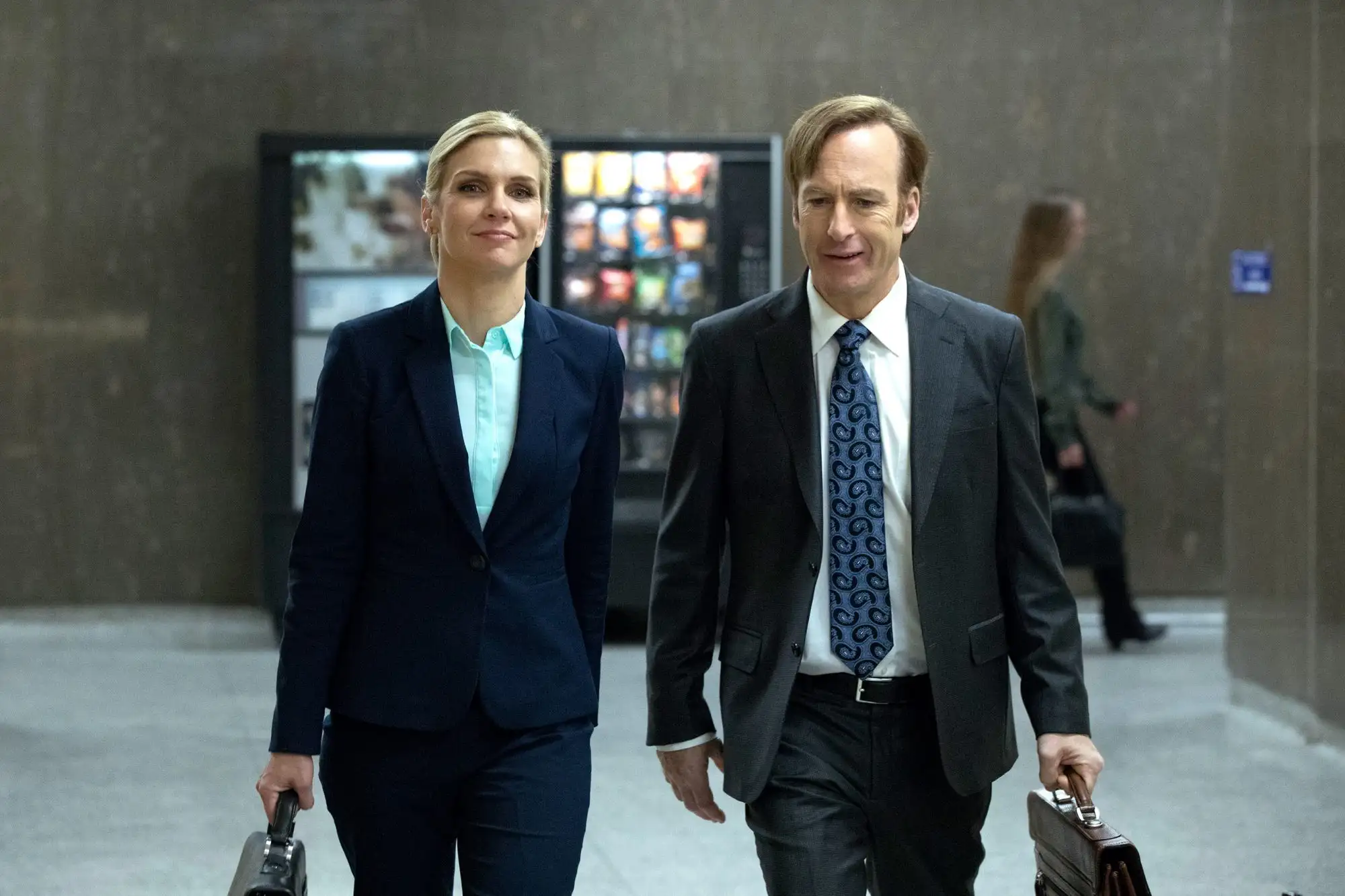
The entire weight of the show rests on Seehorn’s shoulders, and she’s proving herself more than capable of carrying it. Seehorn was nominated for two Emmys for her role as lawyer Kim Wexler in Better Call Saul, and in my opinion she should have taken home the statuette both times. I remember when watching Saul that I thought she was perhaps one of TV’s most realized characters. There were many times when Kim and Jimmy McGill (Bob Odenkirk) were in deep, deep trouble and often it was Kim who would come up with the solution. During these moments, the camera would linger on Kim’s face, watching her thinking these problems through. Those reflective moments showcased what made Seehorn’s performance extraordinary—she could convey complex thought and emotional calculation without saying a word. This was, is, acting as its finest.
However, in Pluribus, Carol has no friends championing her on, no one to confide in or make a plan with (at least, not in the pilot). So there’s very little sharing of screen time for Seehorn once the action gets going. There are many more moments (than in Better Call Saul) where Seehorn is required to just react. We watch as her character Carol experiences terror, loss and confusion on a level she has never experienced before. That nobody has ever experienced before.
IMAX
Gilligan (also one of the pilot’s writers—does this guy ever sleep?) has presented us with a highly original script. We learn everything we need to know about Carol in maybe ten minutes. And then the nightmare takes over. What follows is a suspenseful 40 minutes where Carol tries to save her lover, outrun the “bad guys” and try to figure out “what the f**k is happening?!” (by this point, if you were going through this, I’m sure you’d be swearing too). Yes, there’s a lot of running and car chases and screaming and it looks like the city of Albuquerque, New Mexico is about to burn down, but Gilligan has also created a world where everybody is your enemy…or maybe nobody is.
But here’s what elevates all that chaos above a typical thriller: everything works in perfect harmony.
Over the course of my career in film and TV, I’ve heard various departments called the heart of a production. People have said to me: “it’s really the script that sets a show apart,” or “the cinematography makes the story come alive” or “at the end of the day, it’s the acting that shines through”—but the truth is, it’s all of those things, and more, working in concert. Script, casting, locations, production design, cinematography, editing, sound design, music, etc.,—when they all align under a master like Gilligan, that’s when the magic happens. This is when you can’t look away, when you’re powerless to stop watching. Like Better Call Saul, and Breaking Bad before it, it looks like Gilligan has succeeded here, perhaps once again, in creating exactly that kind of show. Time will tell.
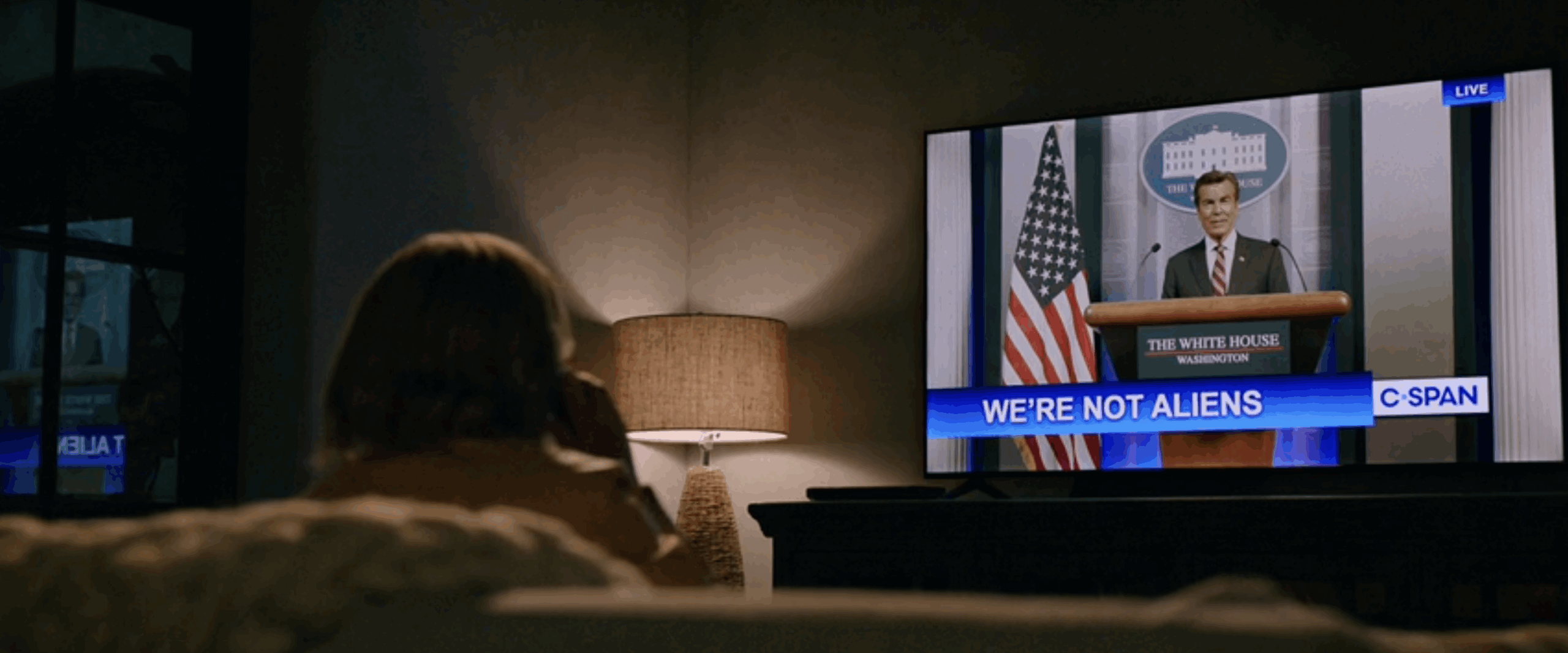
In the final ten minutes of the pilot (which is so fascinating I’ve watched it at least a half-dozen times), Carol has a phone call through her TV set with Davis Taffler, a surviving government official. It was felt Taffler was the appropriate person to talk to Carol, since he was available, nearby and was “wearing a suit” at the time of his infection. Taffler, in a voice so soothing he could be reading a bedtime story to his kids, tells Carol that the President of the United States and most of his executive team did not survive the transition (which I find suspicious).
Taffler goes on to inform Carol that almost everyone on the planet Earth now possesses a “psychic glue capable of binding us all together”. Apparently, not Carol though. It turns out she is just one of the 0.000000148% of the population (which translates to a total of just 12 people in the entire world) who is immune. But who is “us”? And why is a signal from space making everyone so gosh darn polite and friendly? It’s like Invasion of The Body Snatchers meets the residents of Mayberry.
IMAX
In the pilot, the word “pluribus” isn’t mentioned. It’s likely short for the Latin phrase “e pluribus unum”, which translates to “one out of many”—which makes sense as Carol is that one out of many who has been left untouched by the virus. I believe it’s up to Carol (and the 11 others scattered throughout the world, if she can somehow find them) to stop this…invasion.
Yes, invasion. I can’t know for sure what the motivations are yet, but something bigger is clearly going on here. You don’t send a radio signal 600 light years to Earth just to make the entire population seem like they’ve taken one too many hits off a joint. The conversion and getting everyone co-operating telepathically must be just the first step. The threat here isn’t just absorption—it’s weaponization.
The clock is ticking. And I will say this: Carol is in trouble. Because, as Taffler tells her calmly: “We will figure out what makes you different…so you can join us.”
Those words sent a chill down my spine.
IMAX
About the Writer

Want more movie and TV show reviews?
Subscribe to the #1 newsletter for Canada’s creatives. Backed by the Toronto Film School, this free industry newsletter offers:
- Insider Access: Get special access to key industry events and opportunities
- Curated Content: Receive a curated mix of news, reviews, tutorials, and videos directly in your inbox
- Job Alerts: Stay updated with the latest job openings in Canada’s creative sector
Join 10,000+ other creatives who rely on the Insider Advantage to stay ahead of the curve!

