I Like Me Review | A Satisfying Tribute to a Canadian Comedy Legend
by Garry Murdock

IMAX
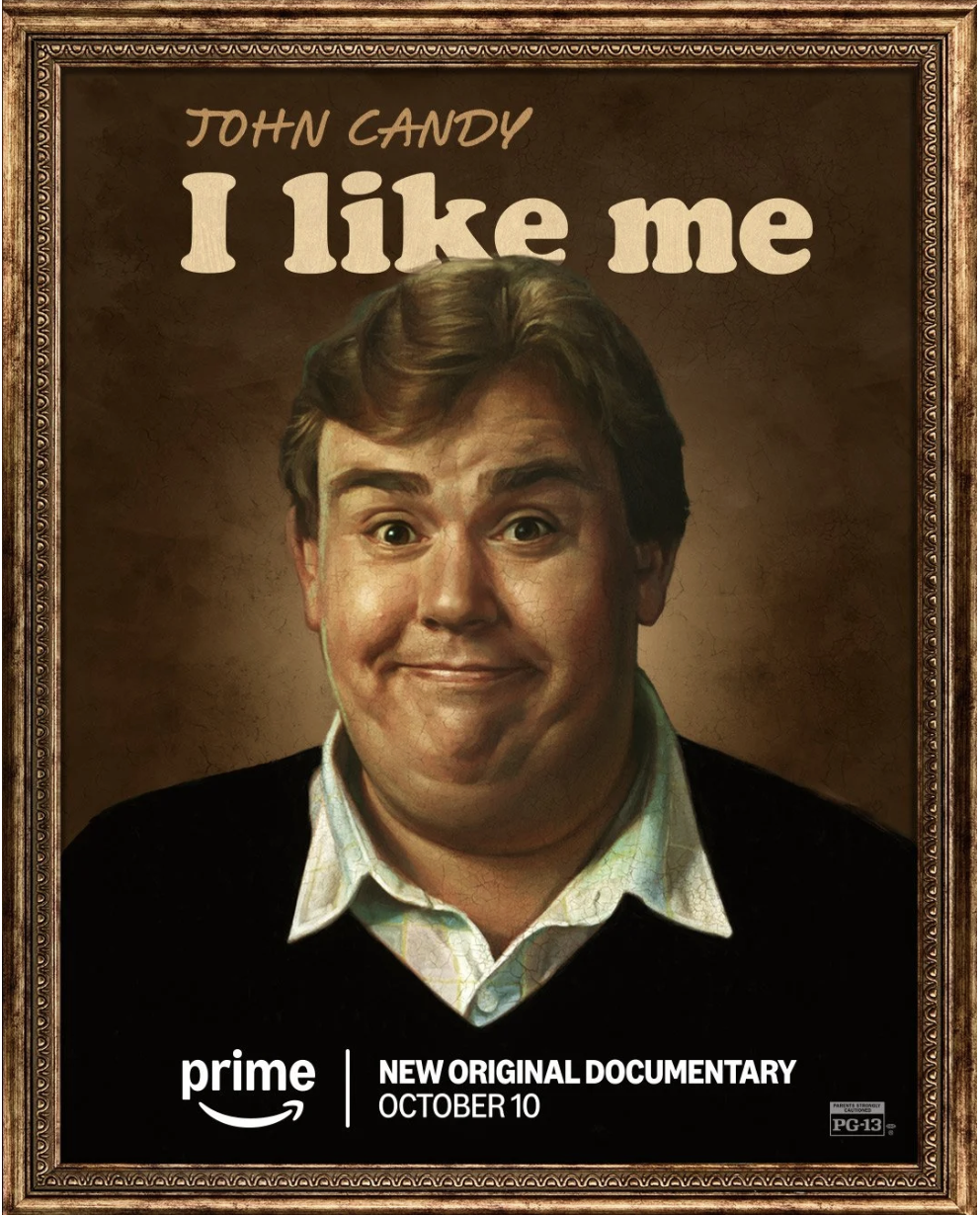
John Candy. Just hearing his name brings a smile to my face. When I heard about the new (and long overdue) documentary based on his life, John Candy: I Like Me, I found myself looking forward to seeing it. The film is filled with new interviews with many familiar and famous faces (such as Bill Murray, Steve Martin, Conan O’Brien, and many more), family members, and friends. It has some absolutely priceless soundbites. It is by no means a masterclass in how to produce a perfect documentary (more on that later), but director Colin Hanks and producer Ryan Reynolds have presented us with some new insights into the life of a Canadian movie star who left us far too young, at only 43 years of age.
IMAX
IMAX
When I think of John Candy, I feel a connection that’s hard to explain. He grew up and went to school in the east end of Toronto, not 15 minutes from where I live now. Today, when I see him in a movie, I know I’m going to enjoy his performance regardless of the plot or other characters. He just seems so approachable, so down to earth. And that laugh of his is contagious. When you get right down to it, I believe it’s this: I wish I had known him. I think Tom Hanks summed it up best when he tells us: “John Candy is a man who will look you in the eye and be so present with you that he will make you feel as though you are the most fascinating creature on the planet Earth.”
I like me. My wife likes me. My customers like me. Because I’m the real article. What you see is what you get.” – Del Griffith (John Candy in Planes, Trains & Automobiles)
This was a man who everybody recalls as kind, gentle, sweet, a true gentleman. He was always looking out for people, whether it was his family, fellow cast members, or the film crew. There was no talk of mood swings, rage, or stories of on-set tantrums often associated with movie stars (apparently he never trashed a hotel suite either). Martin Short talks about a time in the beginning, before they were famous, where the man was so generous that every time the cast of Second City Television (SCTV – where John really got his start) went for dinner, Candy would always pick up the tab “and yet he’s making the same money we are.” Macaulay Culkin, who was only eight years old when he worked with Candy on Uncle Buck, tells us: “I remember John caring, when not a lot of people did.”
O’Brien adds some additional perspective about when Candy did become famous: “The hazard of this business is that it’s very unhealthy for people pleasers. Because if you’re a people pleaser (like Candy), they’ll take whatever you got and they’ll ask for more. And there’s no end to it. It’s a bottomless cup of coffee.”
Candy’s life was not an easy one. His father died young, on John’s 5th birthday, a tragedy that haunted him his whole life. He was shy and introverted at a young age, and his escape was music, movies, and football. Later, when he inexplicably tried to enlist in the Vietnam War, he was rejected at the Buffalo recruiting office repeatedly because he had busted one of his knees permanently while playing football.
So he did what most of us did and got a “regular” job. He went to work at Eaton’s (once the largest department store in the country) alongside many other family members who were already employed there. He had a regular pay cheque and even a company car, but eventually he took the gamble and moved on to children’s theatre, and eventually SCTV. Steven Spielberg was so impressed with his work that he hired him on the spot when they met at an SCTV party—the film was 1941.
Even though Candy told journalists “I’m quite happy the way I am,” his wife Rosemary points out that in the beginning his fame was defined by his weight. One unidentified interviewer in a clip says: “It’s called big city comedy, and if you can’t remember ‘big’, take a good look at John.” Another reporter asked: “Don’t you think it’s true everyone loves a fat man?”. Candy handled his responses to these absurd questions with grace, once replying with: “I think it bothers other people more than it does me.” I would say those interviewers were lucky the producers did not super their names in this documentary. Even more appalling, when Candy did lose weight (and some times the loss would be considerable), his agency would tell him not to lose any more, because according to Rosemary, “the industry wanted him big.”
As mentioned, Tom Hanks is interviewed and his occupation and movie is supered on the screen as “Actor, Splash” because it’s in that film where they first worked together. Hanks plays Allen Bauer, a man who falls in love with a mermaid, while Candy played Allen’s zany brother Freddie. Splash is credited as Candy’s break-out role. Clips are shown from the movie, and I had forgotten how funny the film was (the scene of Candy in a red track suit trying to play a game of squash while hung over and smoking at the same time is hilarious). Hanks and Candy would work together again the next year in Volunteers, and although that film is not mentioned here, I remember Candy’s performance as hilarious and scene stealing.
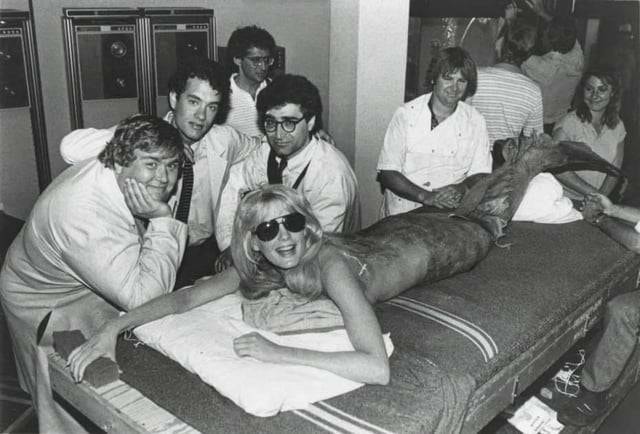
Image courtesy of Buena Vista Distribution Company.
IMAX
O’Brien in particular was impressed that Candy had time for him. Candy was an established star and O’Brien was only in college when they met: “He’s everything you wanted him to be. He filled a room with his aura…I remember admitting to him that I was very interested in comedy. And I might even want to try it. I’ll never forget this. He looked me square in the eye and said: ‘you don’t try it. You either do it or you don’t do it. You don’t try it, kid.’ And that spoke to me, like – all in kid, all in, or not at all.”
Candy starred or appeared in such high-profile movies as Stripes, Uncle Buck, Brewster’s Millions, National Lampoon’s Vacation, Armed & Dangerous, The Blues Brothers, Spaceballs, Home Alone, Summer Rental, Cool Runnings, JFK, Planes, Trains & Automobiles, and dozens of other films.
“As much as he was John Candy, he was also playing John Candy,” his daughter Jennifer tell us. Her brother Christopher agrees: “in a way, yeah, it’s like he created for himself the father he probably always wanted.”
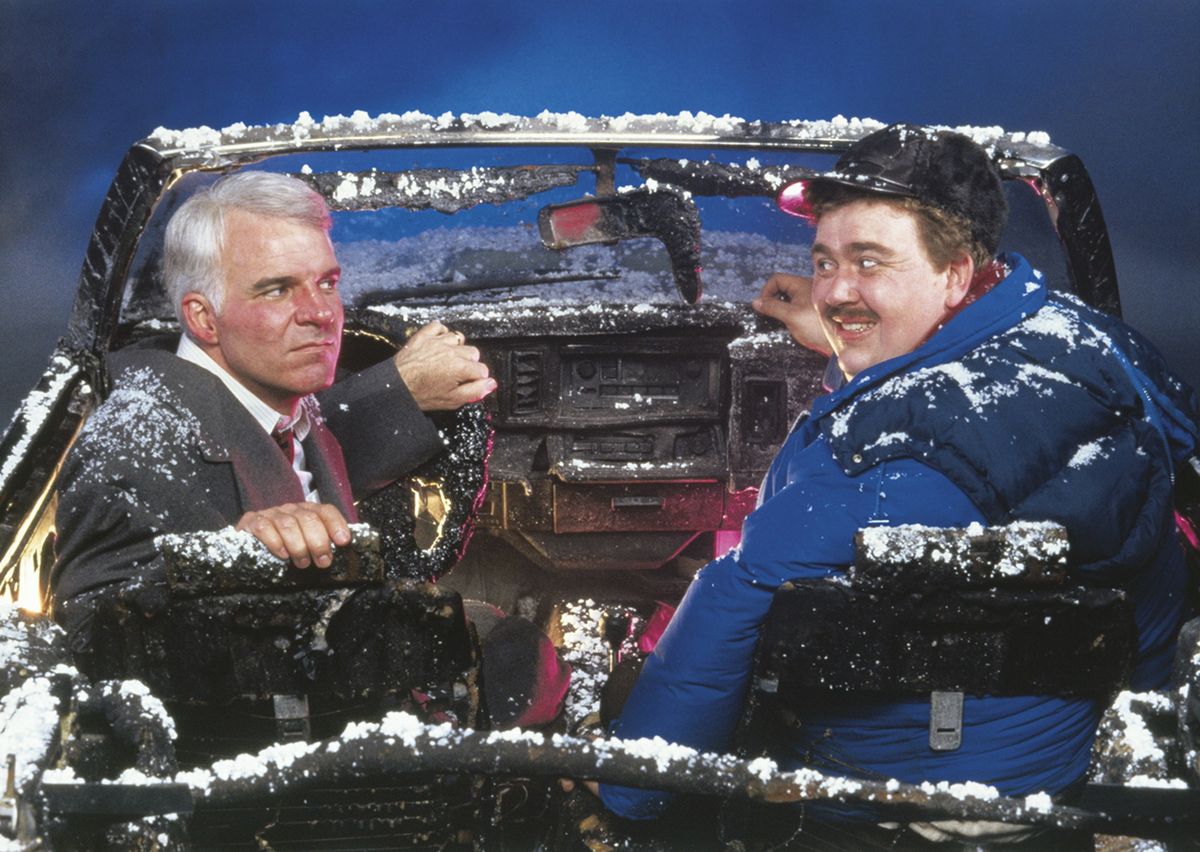
Planes, Trains & Automobiles is arguably Candy’s finest performance and my favourite of his films by far. In it, he plays Del Griffith, shower ring salesman, who finds himself attached to Neal Page, marketing executive, as they both try to make their way home in time for Thanksgiving. However, one disaster after another follows, and they just can’t seem to shake each other.
IMA
This is the movie the title of this documentary comes from. When Page berates Griffith for taking advantage of him, Griffith responds with: “You want to hurt me? Go right ahead if it makes you feel any better. I’m an easy target. Yeah, you’re right, I talk too much. I also listen too much. I could be a cold-hearted cynic like you, but I don’t like to hurt people’s feelings. Well, you think what you want about me, I’m not changing. I like me. My wife likes me. My customers like me. Because I’m the real article. What you see is what you get.”
Martin thought the world of Candy’s performance, stating: “His facial response in that scene told a huge story. And I always feel bad, you know, I’d say: well, we are just pretending, you know. But he acted so hurt.”

IMAX

IMAX
The interviews in the documentary are extremely well conducted, and that’s no small feat. We get many insightful and thoughtful soundbites not just from those already mentioned, but also Mel Brooks, Andrea Martin, Dan Aykroyd, Eugene Levy, Catherine O’Hara, and Dave Thomas (although Rick Moranis—also an SCTV alumnus—is strangely absent). Anyone who has ever directed an interview will tell you that it’s often very difficult to get meaningful, even coherent clips—but there are plenty here. So kudos to director Hanks and his team for pulling that off, as what these people had to say really put Candy’s life into perspective, even if the stories they told us were sometimes heartbreaking.
The documentary, however, is not perfectly put together. As the doc opens, an unidentified voice discusses Candy over a montage of his films and other footage, leading into the title screen. Strangely, we never learn who’s speaking.
Candy died in 1994 in Mexico while working on a film. His death is dealt with very early on, with some footage of the actor’s funeral at St. Basil’s Catholic Parish Church in Toronto. What’s strange is later on in the documentary Martin Short mentions the shutting down of Highway 405 for the funeral procession. Viewers—especially Canadians—might assume he misspoke and meant Toronto’s Highway 401, not realizing there was a second funeral held in Los Angeles. The documentary never clarifies that there was, in fact, two funerals. He’s buried not in Toronto but in Culver City in California.
The documentary’s handling of John’s brother Jim left me puzzled. We’re told John helped him get a job on the production crew at Second City, and there’s mention of Jim having a heart attack during work, and later recovering. There’s talk of Jim not happy with John’s fame. But Jim’s story simply stops there, and he’s not interviewed for this documentary and I couldn’t help but wonder why. A quick Google search revealed that Jim died in 2011, but I felt we should have been told that.
Strangely, there is an after-credit scene, which is apparently a cut scene from Planes, Trains & Automobiles—however, it didn’t make any sense to me. It was confusing and added no value at all to the documentary. It was not the way to end this film.
I also didn’t feel the documentary was transparent about Candy’s personal problems other than his weight and anxiety (we do learn that he was seeking professional help for his insecurities at a time when nobody did that—or at least admitted to it). But his cigarette smoking and binge drinking, and use of drugs (he apparently quit after John Belushi’s death in 1982) is not discussed. I believe these were likely deliberate omissions on the part of Hanks and Reynolds, and that they didn’t want Candy to be remembered in a negative light. However, I do feel that in order for viewers to get a complete picture of the man, they should have included these addictions and Candy’s attempts to overcome them. Having said that, had they delved into this part of his life, I believe it would not have changed my opinion of the man.
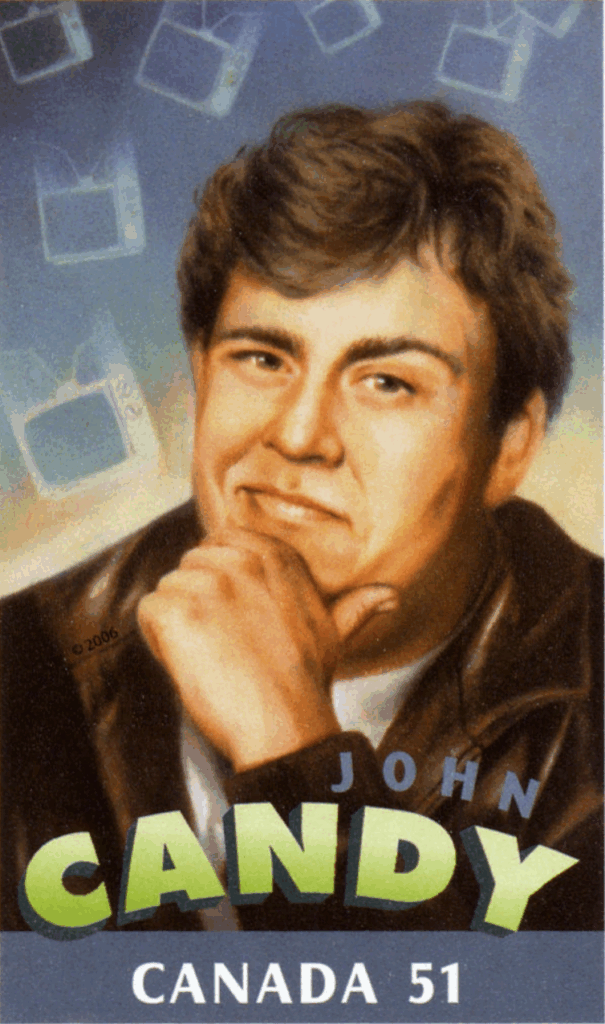
Today, had he lived, he would have been 75 years old.
IMAX
Overall, I’m glad this documentary was made. It deepened my appreciation for who John Candy was as a person. And if there was any one thing that really resonated with me, it was when the documentary highlights Candy’s inability to see himself as a success. He always seemed to be filled with self-doubt. According to Rosemary, long after he achieved fame, her husband would ask her: “Will they like me? Will they hire me? Will I ever get another job?”
He need not have worried. We like you John, we always did. And boy do we miss you.
IMAX
About the Writer