
Creative Success Award Winner Brandon Marshall Finds Hope and Purpose in Video Game Development

Without video games, Brandon Marshall isn’t sure he would’ve survived his childhood.
Games, he says, were his escape from the relentless bullying he suffered and a lifeline from the abuse he endured. When he played, all that destructive noise from the outside world simply disappeared and whole new realities – ones filled with hope and endless possibilities – opened up before him.
“Games let me enter worlds where I could be anything or anyone – a hero, a villain, a soldier, or simply someone who mattered,” he explained.
“They gave me friends who didn’t care what I looked like. They gave me dreams that were bigger than my reality.”
It was those dreams that brought the 28-year-old Video Game Design & Development student to Toronto Film School to pursue his lifelong dream of becoming a game programmer. And it was those dreams he’s now that much closer to achieving, thanks to his recent announcement as the latest recipient of TFS’s Creative Success Award.
.
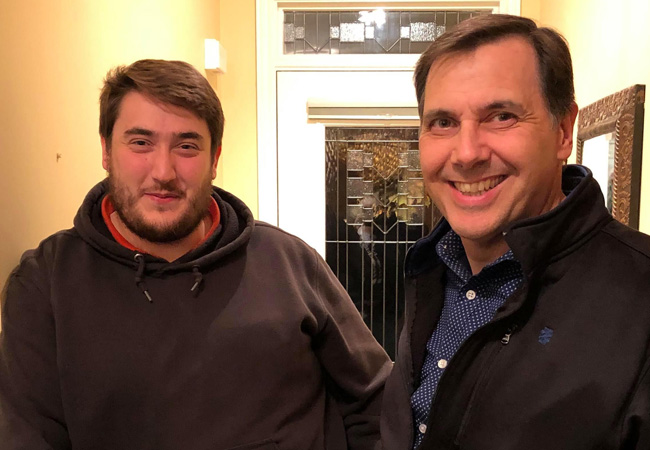
Dedicated to the memory of 2019 Video Game Design & Development program grad Kurt Huhn, the quarterly $2,500 Creative Success Award is granted not on academic merit, but rather to first-term gaming students who demonstrate those attributes most admired in Kurt – namely, his passion, potential and creativity.
Speaking on behalf of his family, Kurt’s father Kevin Huhn said he’s been continually impressed by each term’s recipient of the Creative Success Award – and Marshall is no exception.
“Since the start of this award, I’ve been amazed at the character of the winners. They don’t just have an idea for a game, they bring solid plans and shine as leaders – the core of this award,” said Huhn, himself a TFS Film Production grad who now serves as the school’s Senior Manager of Student Engagement, Events & Partnership.
“It is a privilege to have met Brandon and get to know him in this short time.”
.
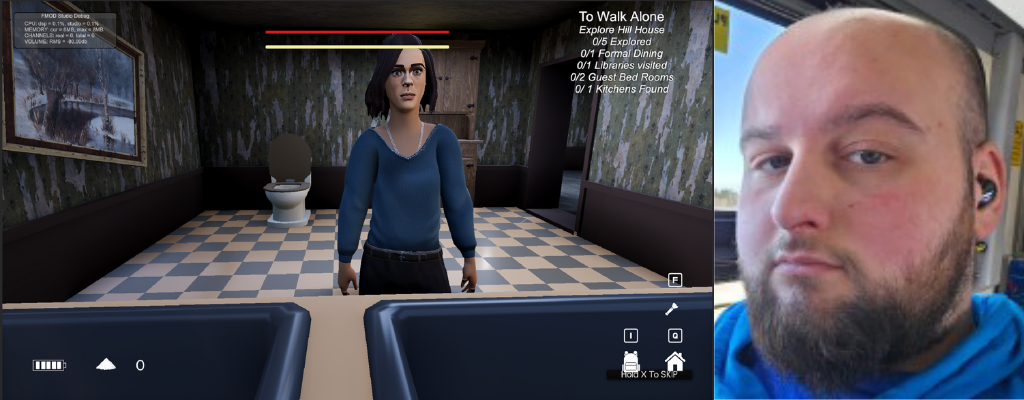
When asked what being named this term’s recipient of the Creative Success Award means to him, Marshall said the answer was a simple one: hope.
“It means I can continue this program without constant fear and stress hanging over me,” he said, noting that finances in the North Burlington home he shares with his mother, who lives with a disability, are tight.
It also carries extra meaning for him now that he’s had the opportunity to meet Huhn and learn about Kurt and the history of award, he said.
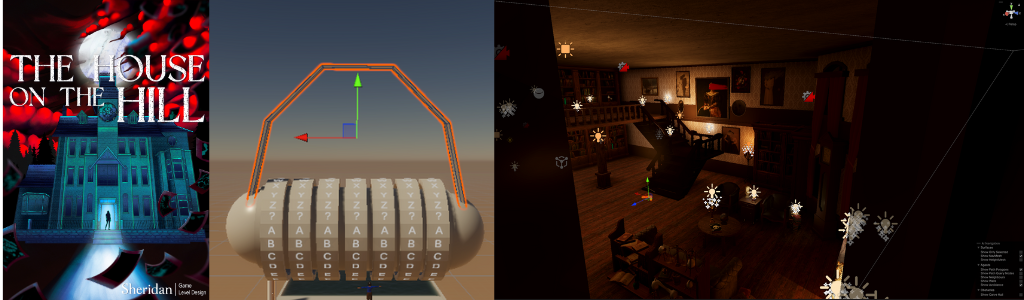
“To receive something tied to such an inspiring person who passed far too soon is both humbling and motivating,” he added. “I hope to honor Kurt’s legacy and follow in his footsteps, not only to become a strong and studious game programmer, but also a good person.”
.
Born and raised on a 92-acre farm, Marshall didn’t always see a career in gaming as a possibility. After graduating high school, he began working as an apprentice automotive technician, eventually earning his 310s license in the field to help provide for his mother.
But after eight years in that industry, his health could no longer handle the physical demands of the work, and he began looking for a new path.
“After years of being beaten down physically and mentally by my job, my family told me it was time to do something I actually loved,” he recalled. “They asked me: ‘If you could do anything, what would it be?’ After some thought, my answer was clear: game programming.”
From there, he earned a diploma in computer programming and a graduate certificate in game development from a local community college, hoping it would gain him the skills he needed to join the industry.
“But after six months of applying and receiving hundreds of rejection letters, I realized I lacked either the experience, portfolio, or skill set – or maybe all three – that studios were looking for,” he said.
That’s when he found TFS’s Video Game Design & Development program – and the support network, connections and career opportunities it opened up for him.
His goal at TFS, he said, is to build confidence and expand his skillset into areas like Unreal, so that he can achieve his post-grad goal of joining a large studio in the AAA space like Ubisoft, Rockstar or Behaviour Interactive.
“All of them shaped my childhood, my perspective as a programmer, and my creative style as a developer,” he said.
For Marshall’s game pitch for the Creative Success Award, he put forth a proposal for Rooster: Shadows of the Mekong – a narrative-driven, single-player survival horror game.
Set during the Vietnam War, players assume the role of an American solider stationed deep in the Mekong jungle at an isolated fire base that comes under siege – not just from enemy forces, but also something far more terrifying: the infected dead.
“The game combines stealth-based exploration, psychological survival mechanics, and night-time base defense, all woven into a surreal, drug-fueled narrative inspired by the real psychological trauma and cultural chaos of the Vietnam War,” Marshall wrote in his game pitch, noting that he drew inspiration for the game’s name from the Alice In Chains song Rooster.
During the day, players of the game are tasked with fortifying their jungle outpost by scavenging supplies, building barricades, and assigning tasks to surviving NPCs, because at night, the dead rise and swarm the base in waves.

.
Both Jean-Paul Amore, director of the Video Game Design & Development program, and Rob Elsworthy, director of the Video Game Design & Animation program, lauded the game for standing out from the rest.
Elsworthy praised the game’s day/night cycle for its ability to keep players on edge: “The winning pitch from Brandon balanced ambition with achievability, offering a clear plan that can be built while hinting at a larger vision,” said Elsworthy, who sits on the bursary’s selection committee alongside Amore. “Build and prepare by day, fight to survive by night. The loop is simple but powerful, grounding survival mechanics with emotional stakes. By mixing history with horror, the game concept feels both familiar and unsettling.”
Amore echoed those sentiments, calling Rooster: Shadows of the Mekong “a truly standout concept, blending survival horror with the psychological and cultural realities of the Vietnam War in a way that feels both innovative and deeply impactful.”
“The integration of stealth, base defence, and a nuanced morale system creates a gameplay loop that is as tense as it is thought-provoking, while the surreal narrative ensures players remain immersed in both the terror of the jungle and the haunting echoes of war,” said Amore. “Winning the Creative Success Award is a well-deserved recognition of how powerfully this concept marries mechanics, theme, and storytelling into an unforgettable experience.”
For Marshall, getting the opportunity to make a game that might one day save someone’s life like the games he played growing up that saved his means the world.
“I owe the industry and the people who make these worlds more than I can ever put into words,” he said. “If there’s one additional note I’d want included about me, it’s this: thank you to the games industry and everyone in it, because for people like me, your worlds mean everything.”

