From The Dark Knight to The Odyssey: How Christopher Nolan’s IMAX Obsession is Changing the Movie-Going Experience
In this article, we examine Christopher Nolan’s impact on modern cinema through his push to shoot The Odyssey entirely on IMAX film—a groundbreaking decision that drove custom technological innovation, highlighted archival gaps in half-century-old projector designs, and helped power a $1.2+ billion global box office sensation.
by Garry Murdock
ImagIMAX
The Odyssey gives the expression “I have to see it in IMAX” a whole new meaning.
Today, the release of a Christopher Nolan film is, without exception, met with high expectations. When you consider the director’s film bio includes The Dark Knight trilogy, The Prestige, Inception (a personal favourite of mine), Interstellar, Dunkirk, Tenet, and Oppenheimer, the hype is—in my opinion—entirely justified.
And the box office numbers for his latest, The Odyssey, do not disappoint. As of this writing, The Odyssey has made over $1.29 billion worldwide in revenue on a production budget of $250 million. And when you consider that the film just opened in China this past weekend—the world’s second-largest film industry (by revenue)—the numbers are likely to go much higher.
It took less than a month for The Odyssey to become the highest grossing film of Christopher Nolan’s career. It is also the second-highest grossing film of 2026.
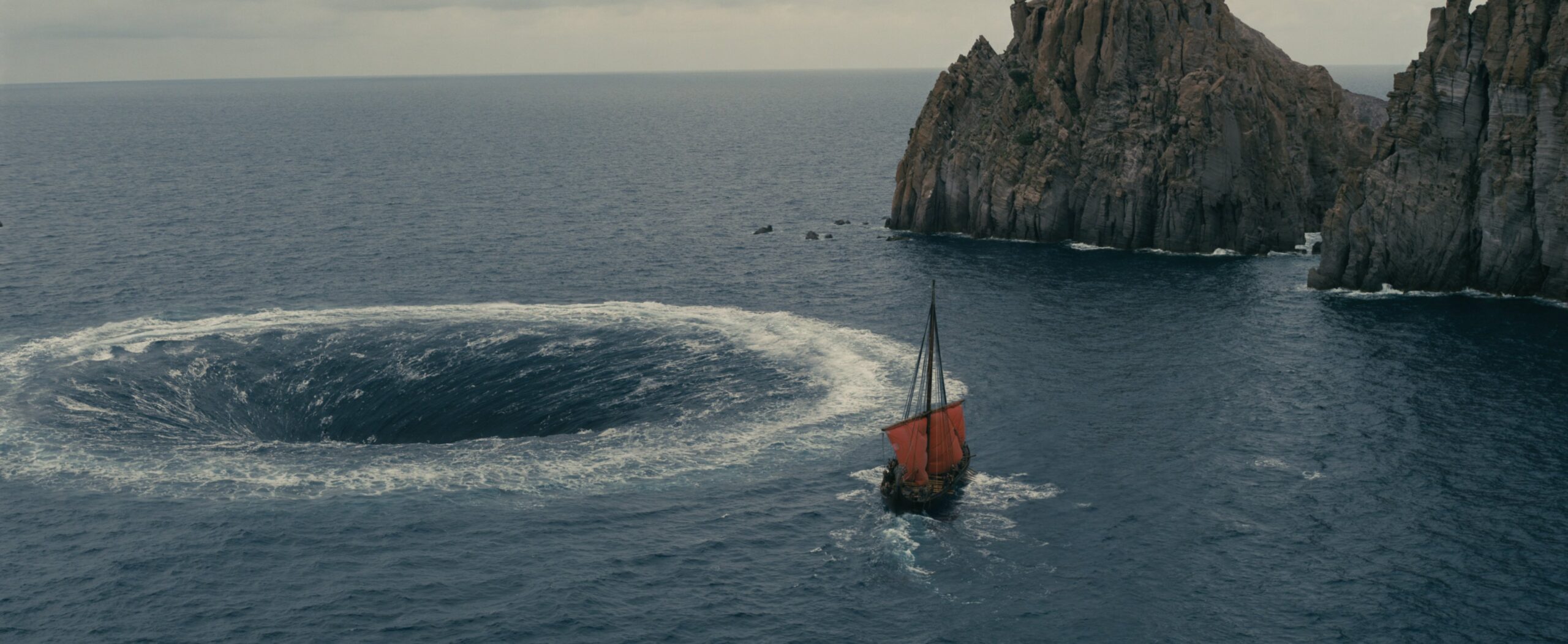
The film is based on the works of Homer, a Greek poet who lived approximately 2,800 years ago. The story goes like this: After many years, the Trojan War has ended and King Odysseus is making the long trek home. During his journey, he will encounter many dangers, including confrontations with the Cyclops and some seductive Sirens. Yet he continues on, desperately trying to make it to the island of Ithaca where his wife, Penelope, and his son, Telemachus, dutifully await his return. Sound exciting? Sure, but not exactly what you would call a mainstream film. There are no superheroes here. No Ken or Barbie.
IMAX
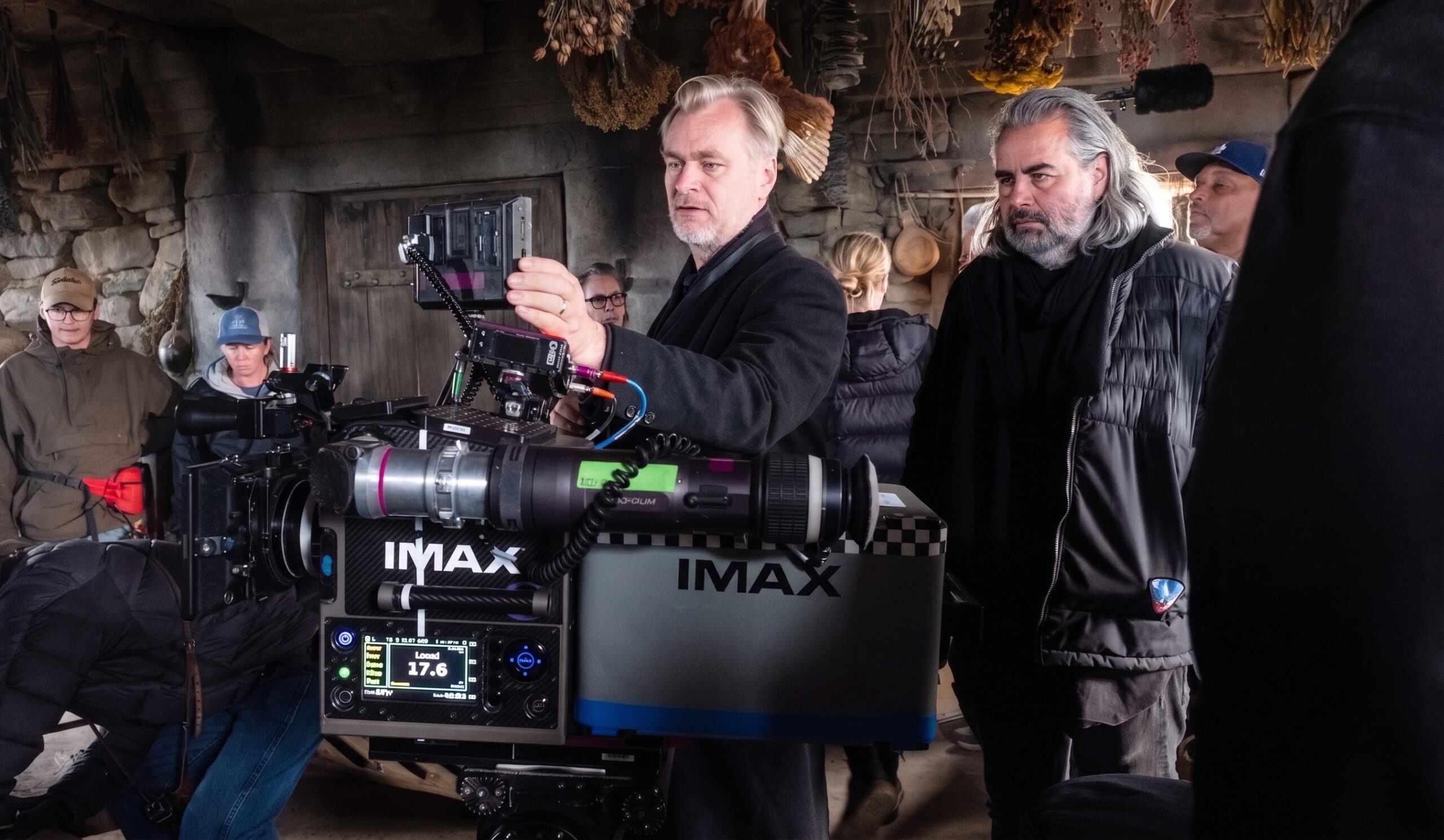
Director Nolan has a few tricks up his sleeve, however, and one of them is the use of IMAX film cameras to make this movie (note the use of the word “film”). I wrote about IMAX technology in 2024, and you can read that article here.
IMAX films are hardly new, but what’s different this time around is that Nolan’s epic, weighing in at just under three hours, is the first feature film to be shot entirely in IMAX film. Nolan’s history with IMAX takes us back to his Christian Bale Dark Knight days.
“I fell in love with IMAX film when I was about sixteen (when I would) go to films at the Museum of Science and Industry in Chicago,” Nolan told Stephen Colbert in May on The Late Show with Stephen Colbert. “I always felt like: ‘What if you told a giant Hollywood story in this format?’…So on The Dark Night, I convinced the studio and I convinced IMAX to let us try and do our action sequences, which we did. Just the action scenes on IMAX. And then over the years, I’ve tried to use the format kind of more and more (on) films like Interstellar and Oppenheimer…but what I always wanted to do was the entire movie that way. Couldn’t do it because the cameras were so noisy.”
With Oppenheimer (my review of which you can read here), Nolan flipped the script. He had IMAX develop black and white film (which did not exist before he requested it) and then used it for intimate close-ups of the actors—instead of long sweeping vistas or actions shots as the cameras were traditionally designed for. But this caused serious problems for the actors when it came to dialogue, because, as Nolan mentioned, the noise the IMAX cameras generated was so loud.
“Cillian Murphy was shouting over the cameras,” Nolan notes, “so it was the wrong performance. And that’s the problem. What we needed was a way to get an IMAX camera that can actually shoot the dialogue.”
IMAX
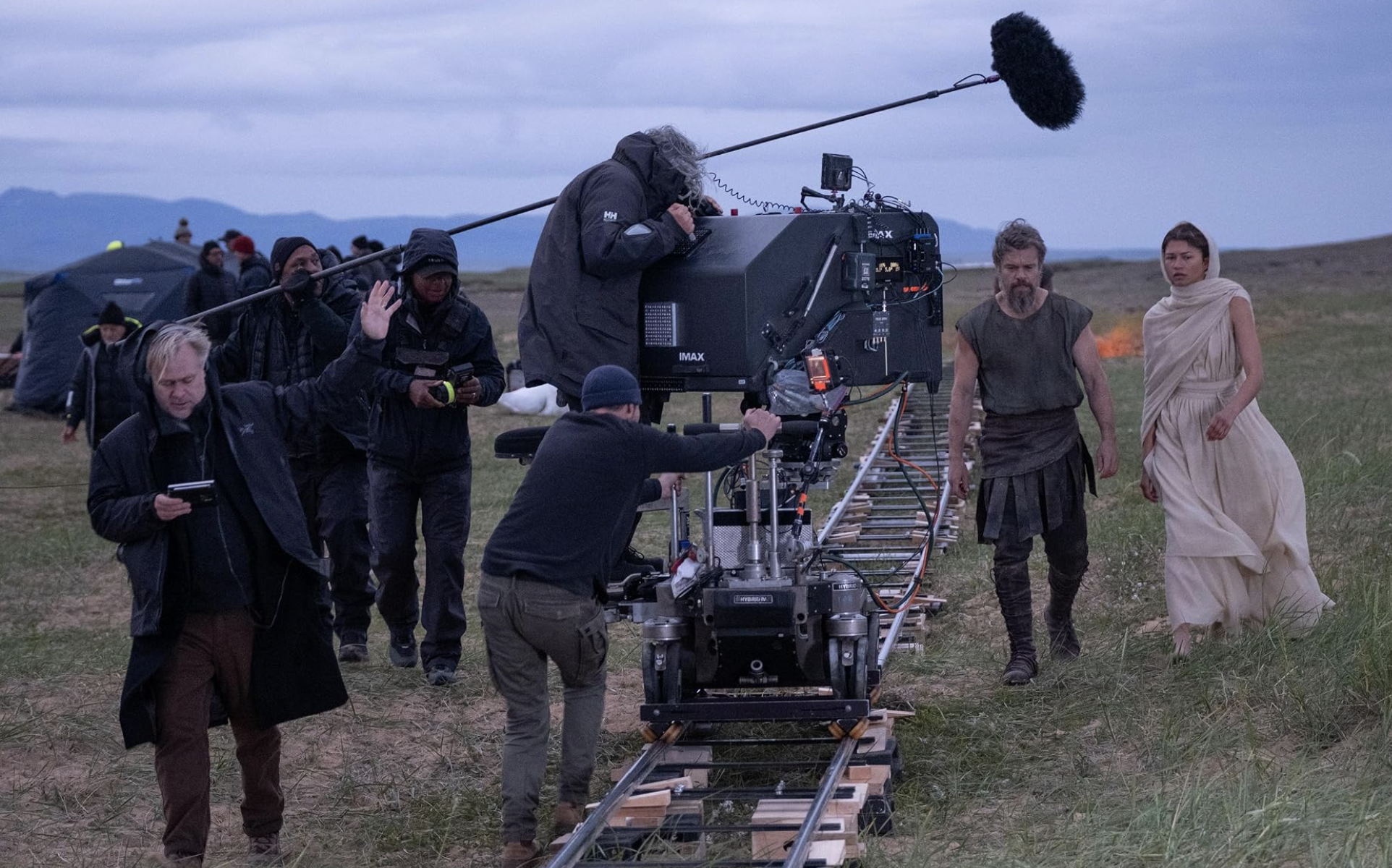
With The Odyssey, Nolan felt it was time for a change. According to The Hollywood Reporter, Rich Gelfond, IMAX’s CEO, was quoted as saying, “Chris (Nolan) called me up and said, ‘If you can figure out how to solve the problems, I will make (The Odyssey) 100 percent in IMAX.’”.
Imagine that for a moment. There’s probably only a handful of directors in Hollywood who could make that request and be taken seriously. But Nolan had by this time built up quite a reputation as a film director, and had nurtured a close relationship with IMAX throughout it. As Gelfond says, “He forced us to rethink that side of our business.”
The challenge was accepted.
The problems, however, weren’t just limited to sound. Nolan wanted a quieter camera, yes, but he also wanted it lighter and more ergonomic. And he wanted scanning and processing issues with the film solved too, so that he could more easily watch dailies during production.
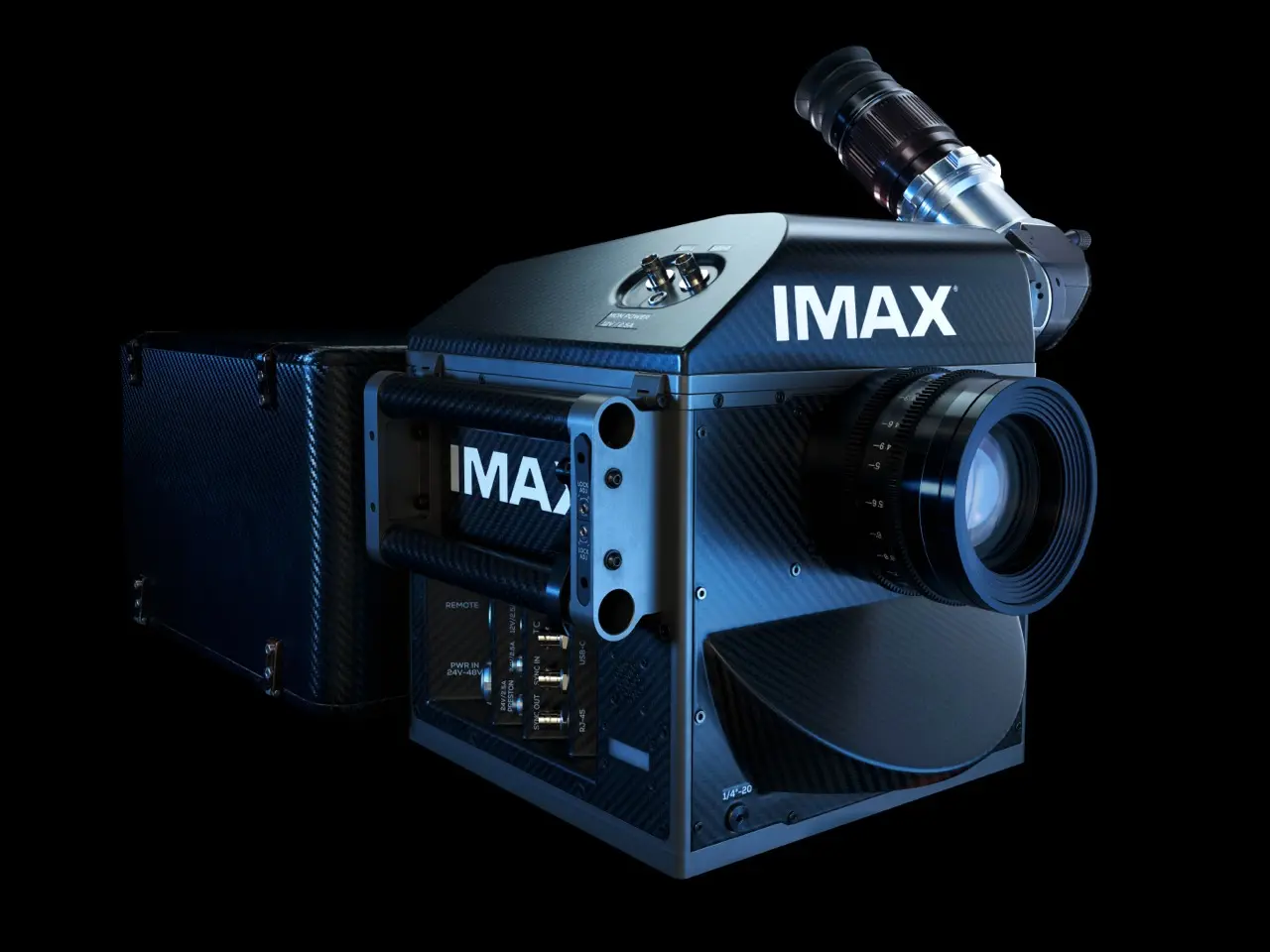
It took two years, and further input from Nolan, but IMAX succeeded. Colbert even joked on his show that the new camera should be called “The Nolan,” but the honour went to David and Patricia Keighley, after whom The Keighley camera was named. David, IMAX’s chief quality officer who had approved all dailies for The Odyssey, sadly passed away before production wrapped. Patricia played a central role in defining IMAX’s gold standard for both image and audio.
The Keighley ran 30% quieter than standard IMAX models—though still not quietly enough for dialogue. To solve this, the camera was encased in a soundproof housing called the “Blimp,” enabling the crew to capture crisp, intimate dialogue on set.
IMAX
IMAX
There were other challenges. Although the Keighley design was not as heavy as previous cameras, it still weighed in at approximately 400 pounds and required a crew of six to move or reposition it. Just as challenging for both cast and crew, Nolan could only shoot for three minutes before having to change the film canister. Yet, this did not deter him, and The Odyssey went into production.
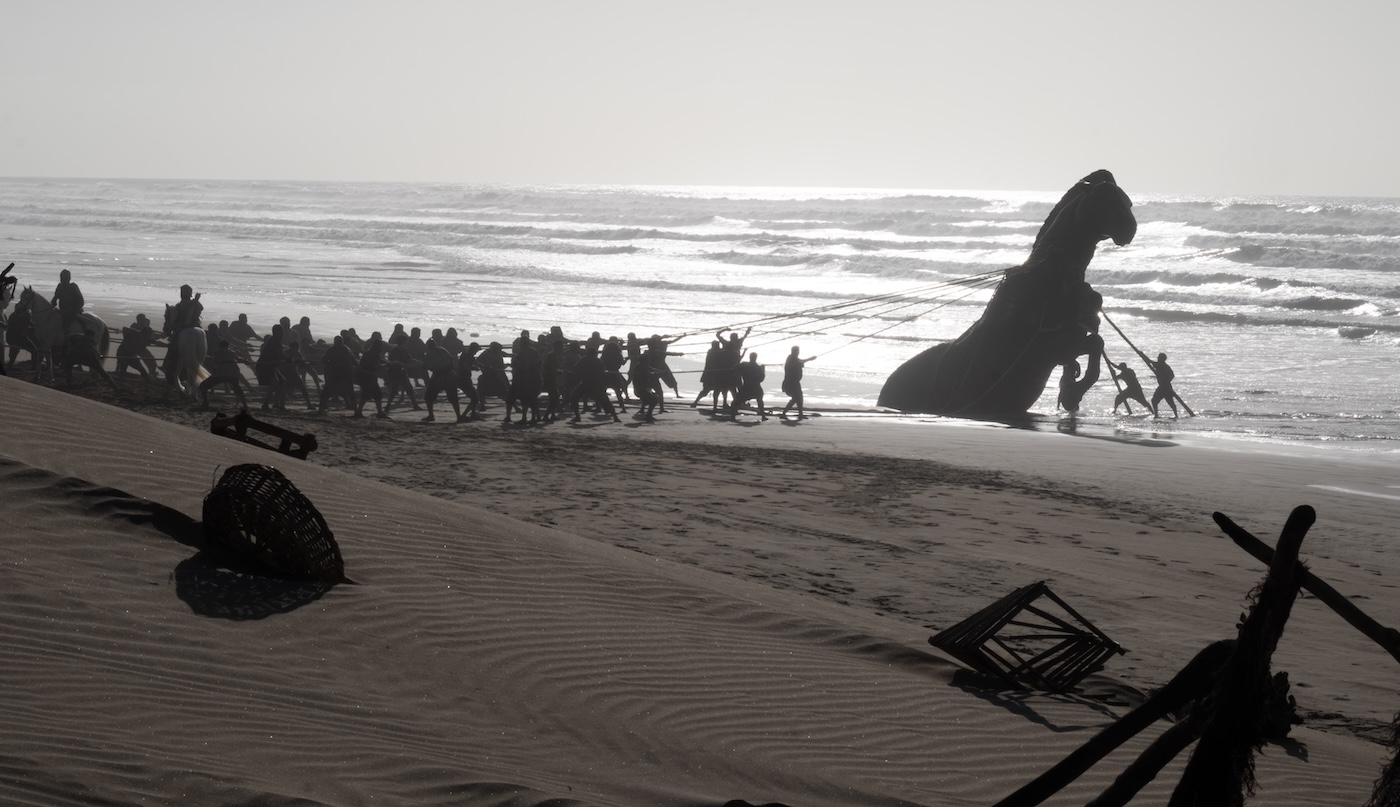
With shooting locations spanning the United States, England, Morocco, Malta, Greece, Italy, Scotland, and Iceland, the film promised breathtaking visuals, framing character-driven scenes against stunning global landscapes.
Word quickly spread that this wasn’t just another release—it was a major cinematic event. Naturally, audiences wondered: since it was shot on film, why not watch it on film, too?
That, however, posed a new problem. Today, almost all theatre chains operate digitally; even those rare movies shot on film are usually scanned onto hard drives for digital projection. IMAX is no exception. Nearly two decades ago, most traditional IMAX film projectors were retired in favour of modern setups like IMAX with Laser, which relies on a 4K digital system.
But with The Odyssey, film screenings were suddenly back in vogue. Old IMAX film projectors were dragged out of mothballs, retrofitted or rebuilt, and put back into service, like the IMAX film projector at a movie theatre in Halifax—which hadn’t been switched on in 14 years (the last film to run through it was another Nolan creation—2012’s The Dark Knight Rises).
In the end, it was discovered that there were only 41 fully-functioning IMAX 70mm film projectors in the world. The United States is home to 25, while Canada has 9 (and we’re the lucky ones—the UK has only 3, and Australia, Belgium, France and the Czech Republic has only 1 each). IMAX
IMAX
Conversations surrounding the necessity of seeing The Odyssey on film brings us right back to the enduring debate between film and digital (which is better?), though that is a discussion for another time. Film clearly remains Nolan’s preferred medium, and notably, IMAX 70mm tickets for The Odyssey went on sale a full year in advance, selling out almost instantly. Reports indicate that dedicated moviegoers are traveling long distances—and in some cases, spending thousands of dollars on international flights—just to experience The Odyssey projected on film.
There’s been some online chatter that IMAX should simply build new IMAX film projectors to meet this demand. But there are problems with that too. A new IMAX film projector hasn’t been built in close to 50 years. The original design files from that time period are not complete. It’s been reported that the parts needed no longer exist. And very few engineers working today fully grasp how these systems even operate. Even if this wasn’t the case, and projectors were readily available, the reality is that film is expensive—a single IMAX film print of The Odyssey costs approximately US$50,000.
So, the majority of movie goers wishing to see The Odyssey this way will have to be content with a digital presentation. And from the revenue it’s generating, it sounds like they are: all told, the movie has become the highest grossing IMAX release ever, taking in $346 million to date.
It could be argued that Christopher Nolan has done more than anyone else to bring IMAX to the forefront of the movie-going experience. Directors JJ Abrams (Star Trek Into Darkness), Ryan Coogler (Sinners), and Cary Joji Fukunaga (No Time to Die) shot key action sequences for their movies using IMAX film cameras. But Nolan—by requesting and contributing to the production of a new camera designed for feature films—deserves full credit for taking IMAX to the next level.
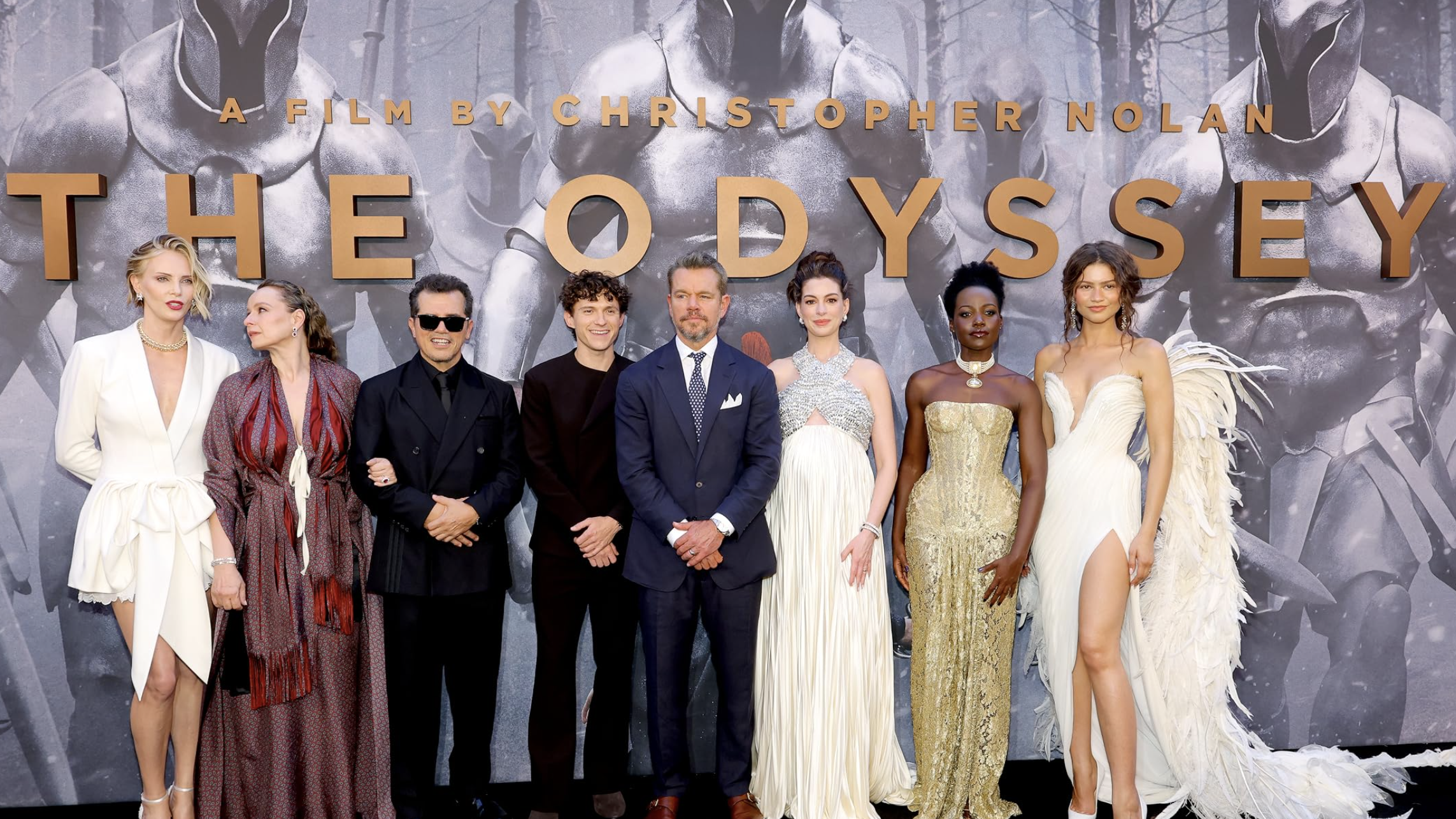
Of course, the film’s success was helped along by a fleet of A-lister stars too. Matt Damon heads a cast that includes Anne Hathaway, Lupita Nyong’o, Robert Pattinson, Zendaya, Tom Holland, Charlize Theron, and more. But the truth is, having not yet seen the film, I had not realized most of these actors were in it. All the publicity I kept hearing about—over and over again—was how the entire movie was shot entirely in IMAX film, a first. This completely overshadowed the cast and other marketing materials.
What does Nolan’s creation mean for the future of cinema? As of this writing, no director or studio has confirmed a new film in development that will be shot entirely on IMAX film. However, when you look at the interest generated around The Odyssey because of Nolan’s persistence to shoot it this way, and the resulting boost to the film’s revenue, I believe it’s only a matter of time.
What’s overlooked is that Nolan does not have an ownership stake in IMAX. He clearly made the requests he did of IMAX for his art, so he could make the film he always wanted to make, in the way he wanted to make it. And for that I must say: Bravo.
About the Writer